SOUNDLisbon, Portugal
Listening to Lisbon: an evening of fado
Choose a performance for the listening experience, understand the practical arrangements, and give the musicians your attention.
9 min readRead story
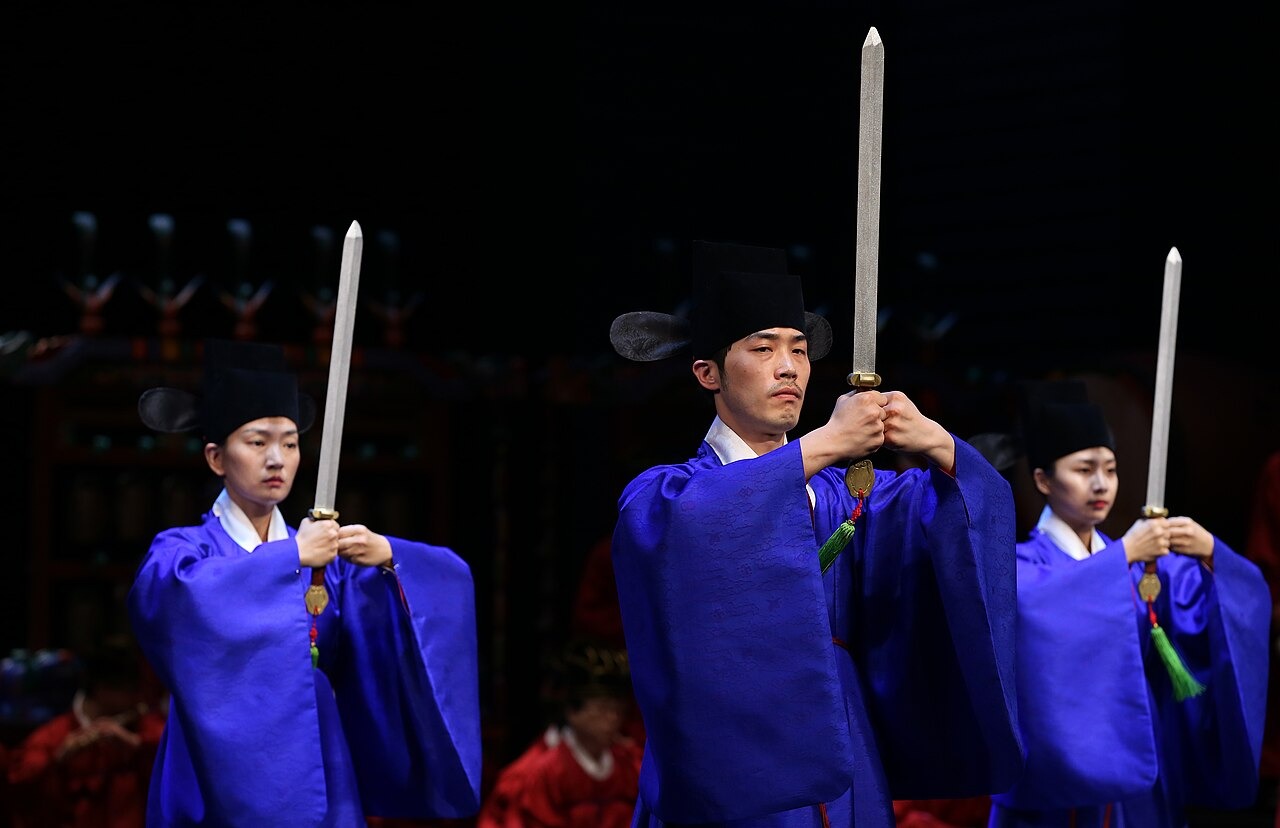
A visit to Seoul's National Gugak Center is an invitation to hear Korean traditional music as a living practice rather than a single historical sound. Start with a programme that explains what it contains, then give its pacing and instrumental colours time to become intelligible. The accompanying photographs document Jongmyojeryeak on stage at the centre, not a ceremony taking place at Jongmyo Shrine. Understanding that distinction opens a richer visit: court and ritual traditions belong within a wider musical landscape, and a staged presentation offers a different encounter from a rite in its ceremonial setting.
By Journey Into Wellbeing editorial team
Published: November 11, 2026
Updated: November 11, 2026
8 min read
Indoor performances can suit visits in different seasons. Choose around the published calendar rather than expecting the same repertoire every week. For a shrine ceremony, verify that year's official arrangements separately; spring and autumn can also make the outdoor parts of a Seoul itinerary more comfortable.
The National Gugak Center is in Seocho, beside the Seoul Arts Center area, not at Jongmyo Shrine. Consult its official directions and a current Seoul journey planner for subway and connecting bus options, allowing additional time to find the correct performance hall.
Gugak is a broad term for Korean traditional music, not the title of one performance style. A programme may bring together court repertory, instrumental music, singing and dance, or concentrate on a particular tradition. Those differences matter more than a generic promise of ancient music. Read the titles and descriptions before booking, and ask for clarification when an English listing is brief. A mixed programme can provide useful contrasts without requiring you to understand the whole field in advance.
The National Gugak Center's published calendar includes its Saturday series as well as separately listed performances. That is a useful place to begin researching, but a recurring series name does not guarantee an identical selection each week. Choose the actual date and inspect its contents. If Jongmyojeryeak is your main interest, ask whether the event includes it, whether it is an extract or a longer presentation, and what explanatory material is provided.
UNESCO describes the royal ancestral ritual at Jongmyo Shrine as a Confucian ceremony for the ancestors of the Joseon dynasty, encompassing song, dance and music. The music therefore belongs to an organised ritual world, not simply a sequence of atmospheric pieces. Learn that basic relationship before concentrating on individual sounds. It helps explain why a measured gesture or a carefully placed pause may carry weight that is not obvious to a first-time concert listener.
Jongmyo Shrine is the ceremonial setting identified in UNESCO's inscription. Its account describes an annual rite on the first Sunday in May, but travellers should verify current dates, admission and viewing arrangements with the responsible authorities. A general shrine visit is not a promise of live ritual music. Equally, a ceremony is not a concert arranged solely for visitors: its participants, procedures and religious or ancestral significance should determine how observers behave.
The photographs accompanying this article show Jongmyojeryeak performers and musicians at the National Gugak Center. The blue robes, ceremonial props and wider stage formation belong to that documented presentation. They do not establish the programme of a future visit. On stage, notice how musical and bodily actions fit together, while recognising that a selected concert presentation and a complete shrine rite have different settings and purposes. Ask what has been selected for the event you attend.
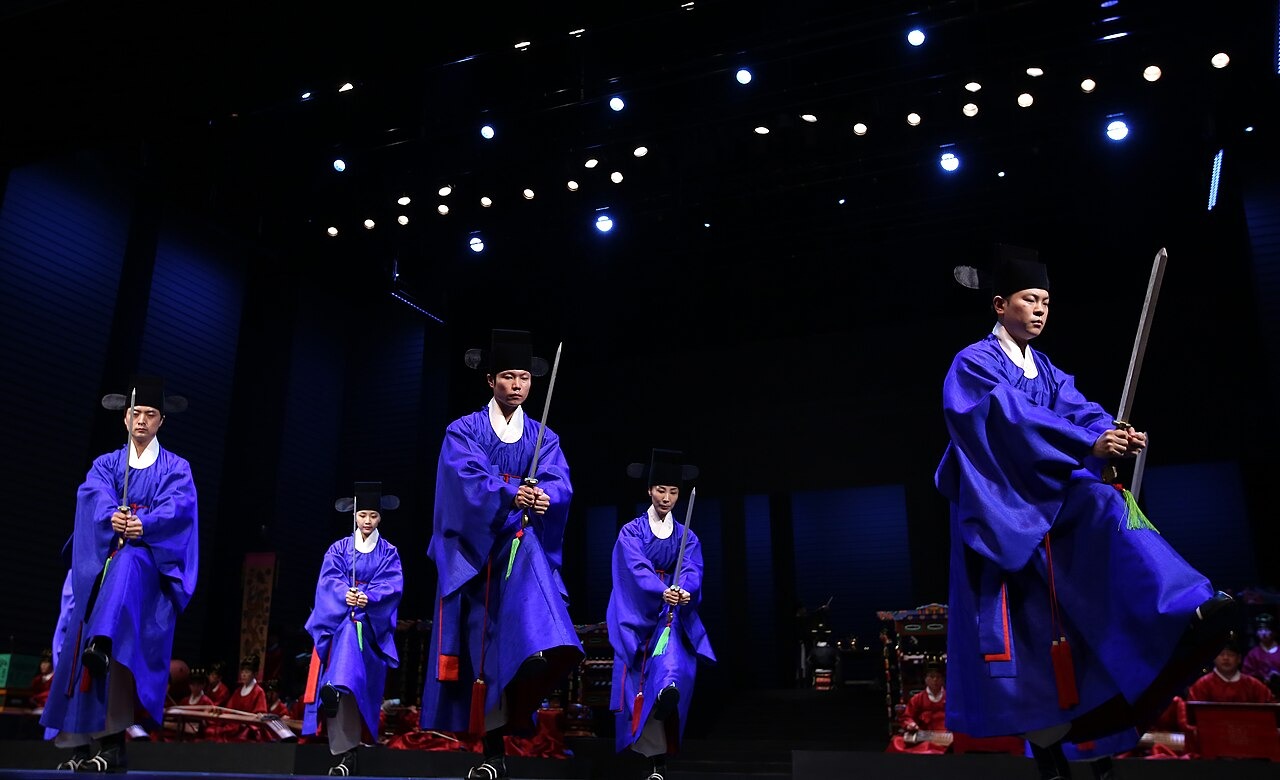
You need not identify every instrument to begin listening carefully. Notice whether a sound is struck, plucked or sustained by breath, then follow how it begins and fades. UNESCO's account of Jongmyo music names instruments including bells, gongs, zithers and flutes. Rather than expecting the blended texture of a Western symphony orchestra, attend to the relationships audible in this particular ensemble. Individual timbres and the spaces between gestures can provide a useful way into unfamiliar music.
Watch the musicians without turning the concert into an instrument-spotting exercise. A repeated figure may feel different when it returns after silence, and a restrained movement may coordinate a larger change. If the programme includes several traditions, compare how each shapes time instead of arranging them from quietest to most exciting. A short, vivid passage and a slower ceremonial span ask different things of the listener. Neither needs to be translated into a familiar genre to be worth hearing.
The centre's calendar also lists Gugak Museum activities, including some English tours. Check the current opening arrangements and reserve a tour if the listing requires it. A museum visit can help connect an instrument's appearance with the sound you later hear, but it should not be assumed to run immediately before every concert. Leave enough time between activities for ticket collection, finding the hall and a pause before listening.
Ask focused questions rather than trying to absorb every unfamiliar term. You might want to understand the difference between a ritual selection and a solo instrumental piece, or how a particular instrument produces its changing tone. Read labels and programme notes as introductions, not as tests to pass. If an exhibit includes recordings or demonstrations, follow the posted instructions and be considerate about volume. Museum objects are not available for handling unless staff explicitly invite it.
The centre and Jongmyo Shrine occupy different parts of Seoul. Check the correct destination in your navigation app and allow realistic time across the city. The centre's official directions describe public transport connections; use them alongside current local routing rather than relying on an old blog's exit number or shuttle promise. A subway journey may still involve a connecting bus or a walk, and that final portion matters in rain, heat or winter conditions.
If you need step-free access, ask about the particular hall, entrance route, seating and toilets before purchasing. Do the same for companion arrangements or any other specific access requirement. The campus contains more than one performance space, so arriving at the institution is not the same as arriving at your seat. Keep the venue's name and address available in Korean for directions, and check your return route before the concert rather than while leaving with the crowd.
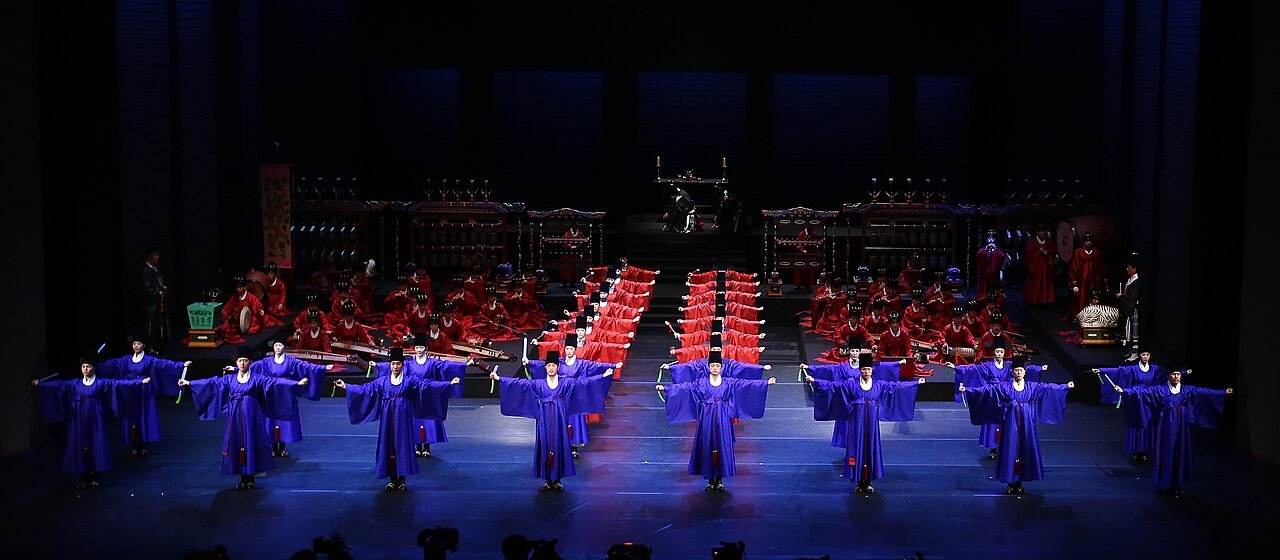
Use the official event page to establish the date, hall, duration, age guidance and booking deadline. The Saturday performance listing includes specific reservation conditions, so do not assume online booking remains open until curtain time. If a translated page and the booking interface seem inconsistent, contact the centre before paying. Confirm how your ticket will be collected or displayed, particularly if registration or a local contact number appears in the purchase process.
Budget for the ticket, transport and a meal without assuming museum activities or special programmes share the same admission. Check concessions and cancellation rules directly. Language support deserves equal attention: instrumental music can be followed without translation, while sung text, spoken introductions and ritual explanations may benefit from an English synopsis. Ask whether subtitles or printed notes are offered for the specific event, not whether the institution has ever provided them. A clear answer can change which programme best suits your visit.
Follow the hall's photography and recording rules even when costumes and formations are visually striking. The existing images provide a record of one presentation; they are not an invitation to film your own throughout. Silence devices, settle before the start and take staff guidance on late admission. For applause, observe the performers and other listeners, particularly when several sections form one continuous work. There is no need to fill every moment of stillness.
After the event, note a few concrete impressions: the grain of a sustained tone, the placement of percussion, or the way a line of dancers changed your perception of the music. Avoid reducing what you heard to a timeless national character. These traditions are maintained through training, institutions and performers working in the present. A good first visit leaves you with a more precise question for the next one, not a claim to have heard all of Korean traditional music in a single sitting.
Do not assume that it will. Consult the repertoire for your exact date or ask the centre directly. A recurring series can contain different selections. If this tradition is essential to your trip, confirm both its inclusion and the nature of the presentation before making other bookings.
No. The centre is in Seocho, while the shrine is a separate destination. The photographs here show a stage presentation at the centre. Plan separate journeys, and check shrine access independently if you want to understand the ritual's original ceremonial setting as well.
Yes, especially when attending closely to instrumental sound and movement. However, translation may matter for sung narratives or explanations. Check whether the selected event supplies English notes, introductions or subtitles. Do not assume that every programme offers the same language support.
UNESCO describes the annual ceremony on the first Sunday in May. Treat that as background rather than a complete travel instruction. Verify the current year's schedule, viewing arrangements and any reservation requirements with the official organisers before planning your day around it.
Verify opening arrangements, transport, access rules and safety information with official sources. We omit numerical budget ranges where reliable current figures have not been verified.
Keep exploring
Choose a performance for the listening experience, understand the practical arrangements, and give the musicians your attention.
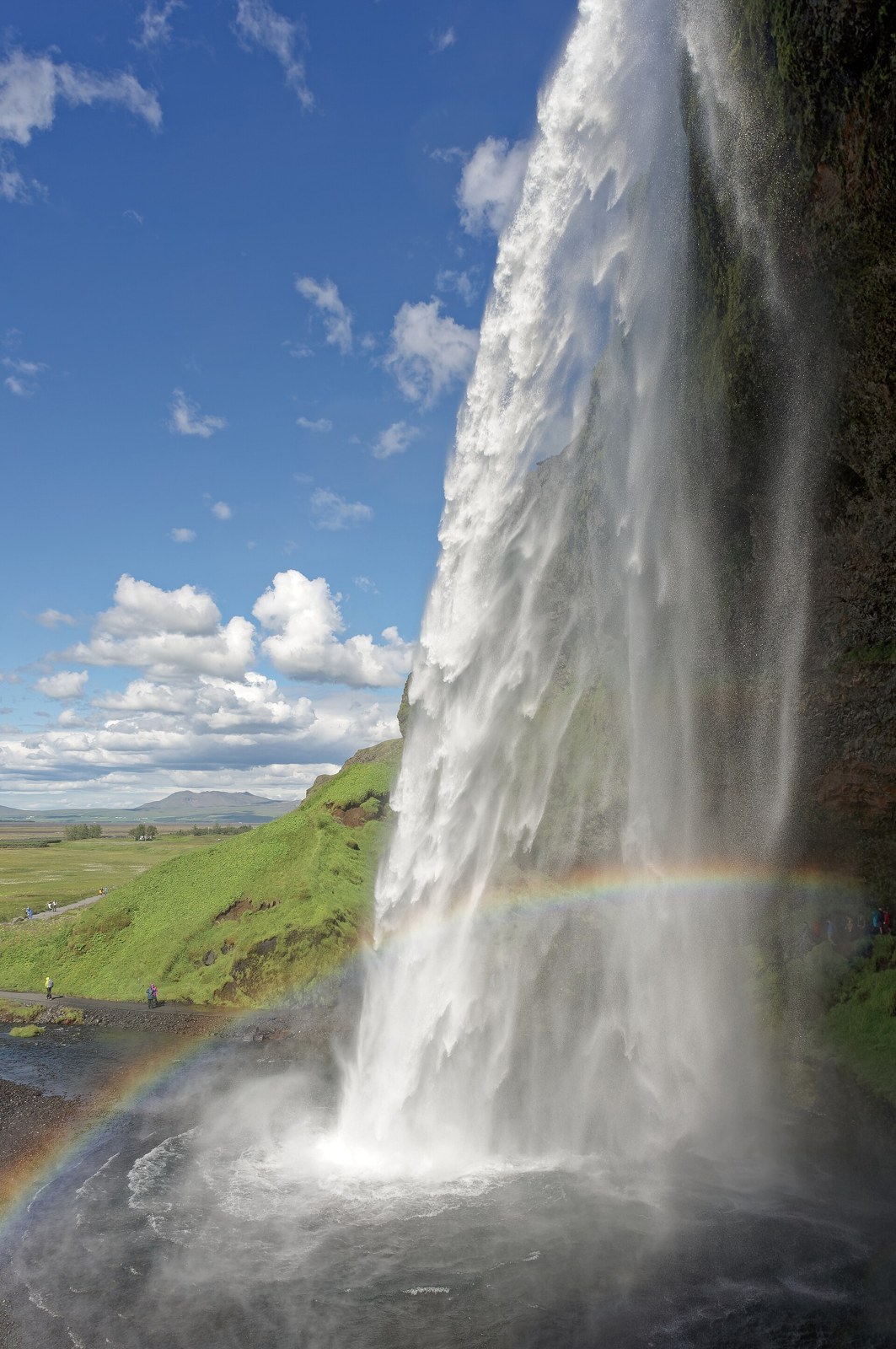
Listen to Iceland through its waterfalls, with a route that puts weather, safe viewpoints and unhurried attention before distance.
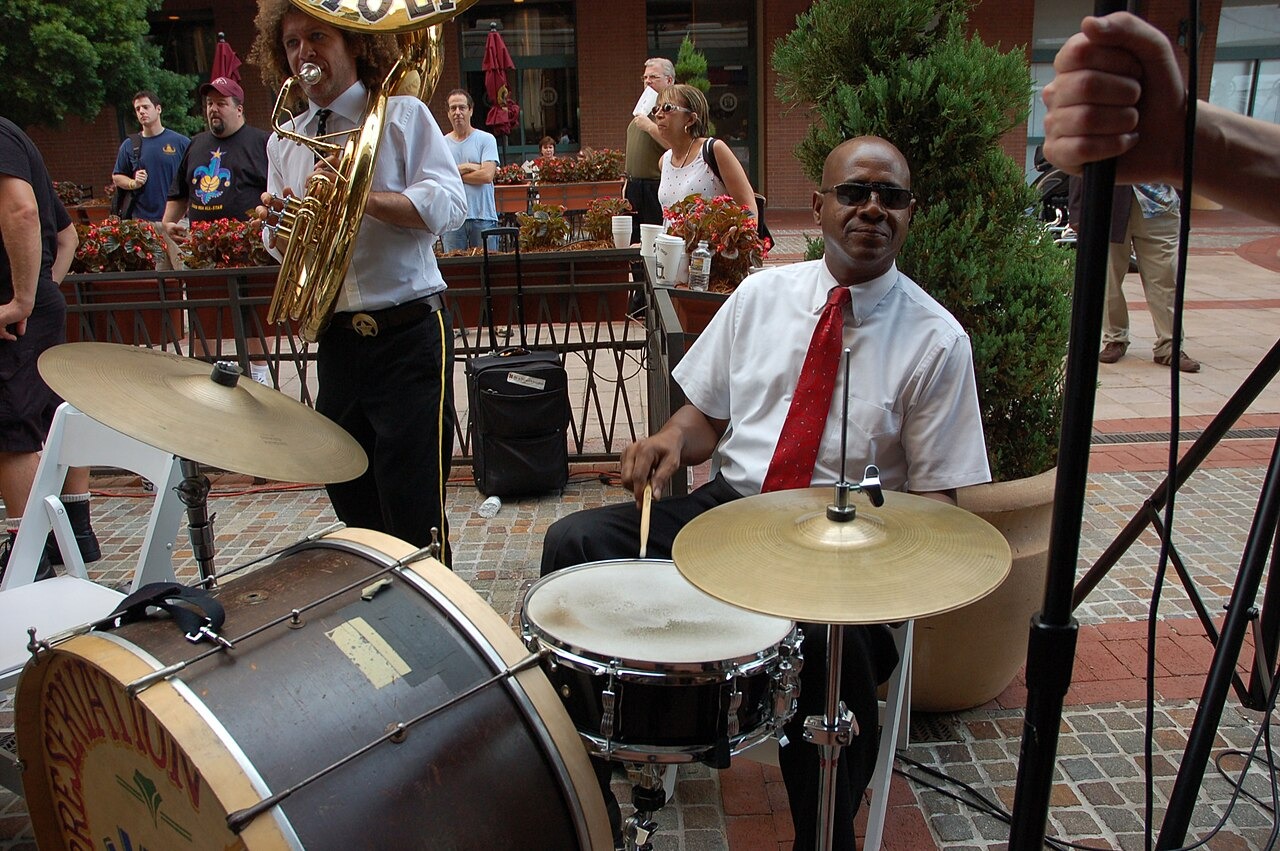
A trumpet phrase rises above the room, the clarinet answers, and the rhythm section keeps a conversation moving underneath. In New Orleans, live jazz rewards this kind of close attention. The city offers famous rooms, neighborhood stages and street encounters, but the richest visit is not a race between them. Choose somewhere to sit, learn who is playing and give the musicians your evening. From the French Quarter to the clubs around Frenchmen Street, the practical choices matter: a quiet seat, a sensible journey home and enough room in the budget to support the people making the music.


