
SOUNDLisbon, Portugal
Listening to Lisbon: an evening of fado
Choose a performance for the listening experience, understand the practical arrangements, and give the musicians your attention.
9 min readRead story
Listen to Iceland through its waterfalls, with a route that puts weather, safe viewpoints and unhurried attention before distance.
By Journey Into Wellbeing editorial team
Published: November 11, 2026
Updated: November 11, 2026
8 min read
Summer generally offers easier road access and longer daylight. Winter requires more flexible plans, suitable equipment and close attention to closures.
Arrive through Keflavik International Airport and continue toward Reykjavik. Choose a regional road itinerary or an organized excursion; do not assume public buses serve waterfall trailheads.
A waterfall announces itself before it becomes a photograph. On an approach path, listen for a low continuous rush beneath the wind, then notice how that sound changes when a ridge or canyon wall intervenes. Iceland rewards this kind of attention because its waterfalls occupy very different settings. A broad river falling into a gorge does not sound like a narrow curtain dropping from a coastal escarpment. You do not need technical knowledge or recording equipment to appreciate the difference.
Choose an established viewing place, stop walking and let your attention settle. Keep enough awareness to hear other visitors and follow instructions. Avoid headphones on exposed paths, especially where people must pass or where wind makes conversation difficult. There is no need to find the loudest possible position. The useful comparison is between safe viewpoints, not between distances from an unprotected edge. Quiet observation works even when visibility is imperfect, provided the path itself remains safe.
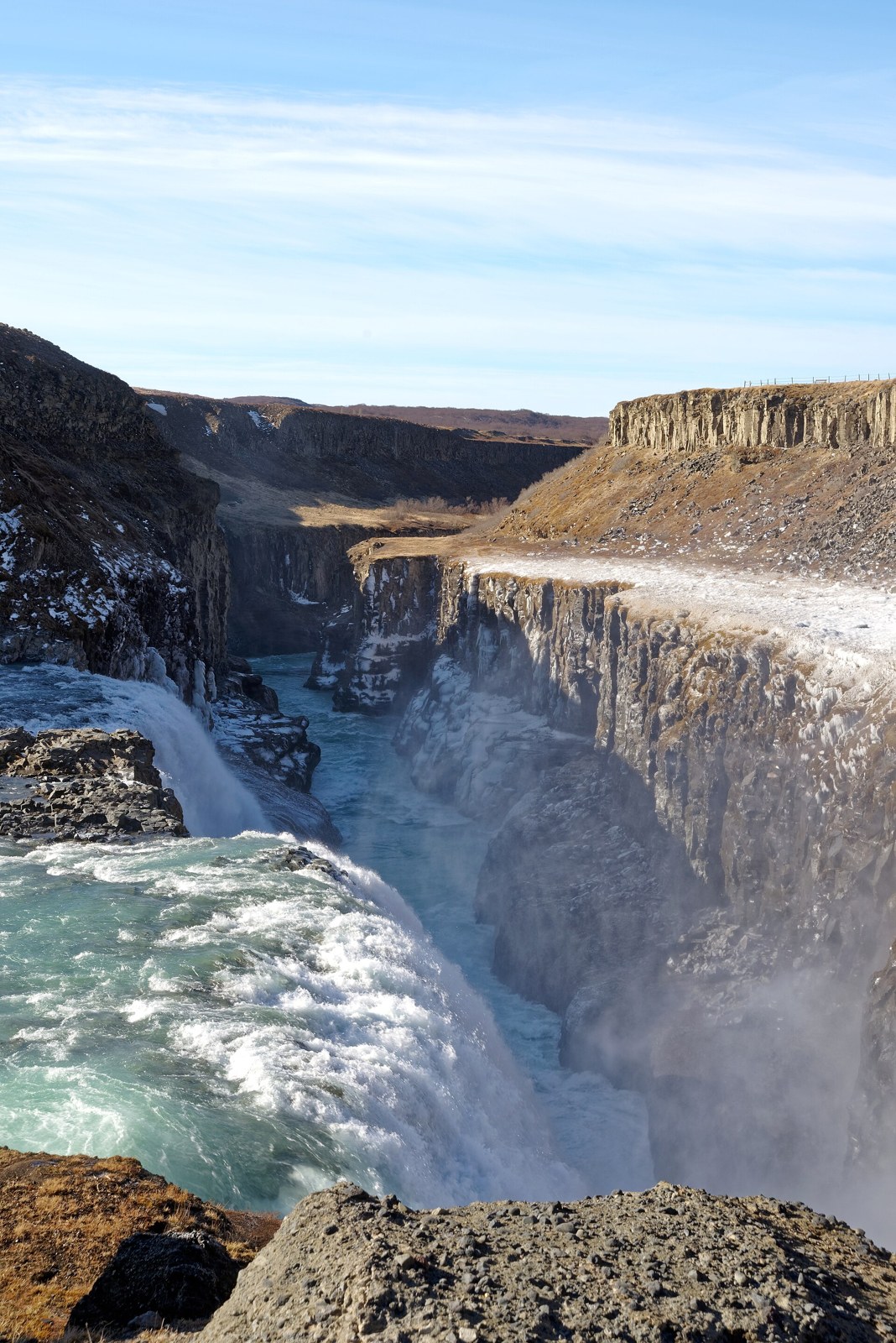
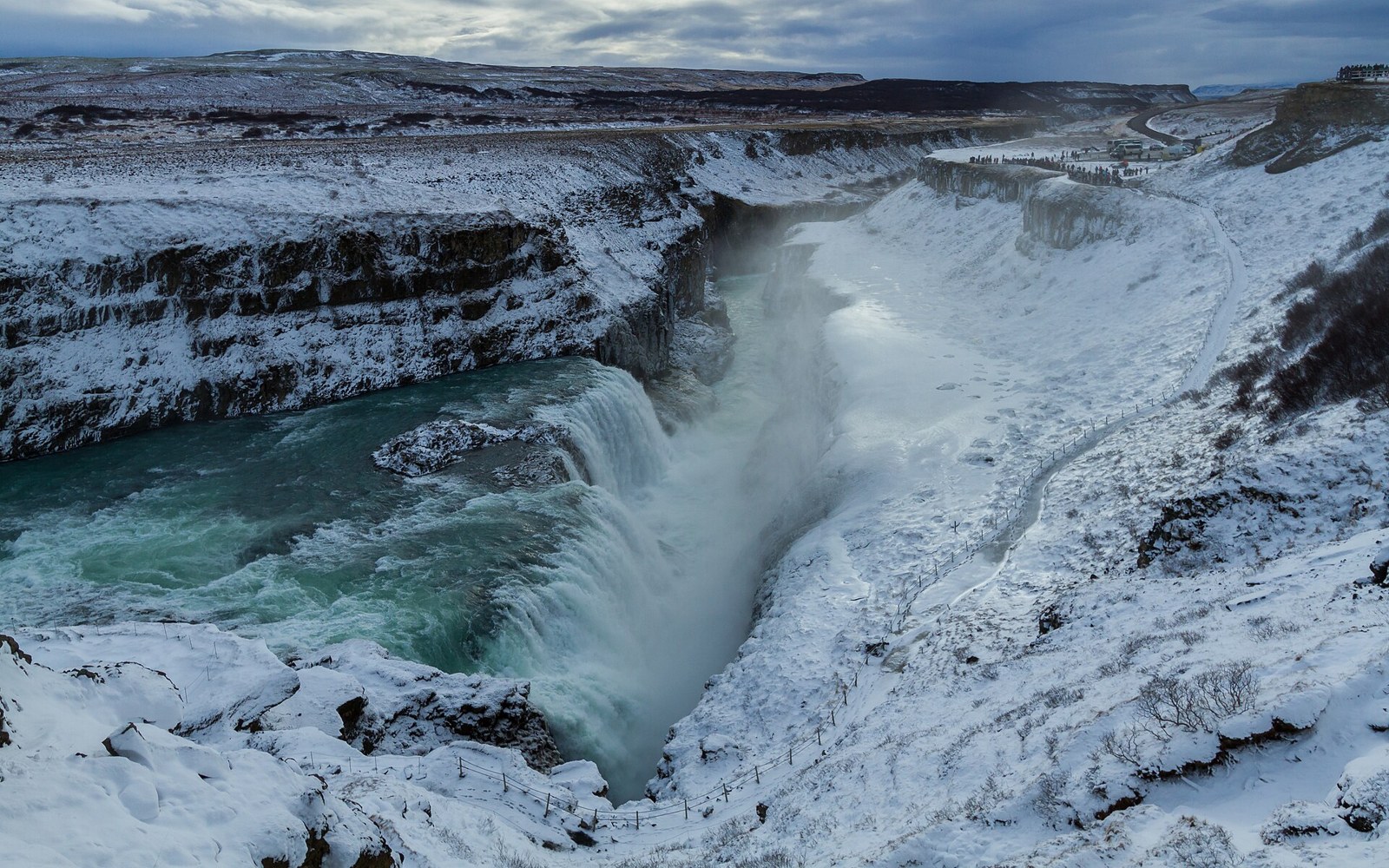
Gullfoss makes a practical first encounter for a journey based around southwest Iceland. The Hvita River descends in stages into a canyon, and the marked viewing areas offer different relationships to the water. From a more distant position, the sound can feel broad and continuous. Closer permitted viewpoints may bring individual surges into focus, although wind direction and river conditions affect what you actually hear. Treat these as possibilities rather than a promised soundtrack. The official tourism overview describes the setting and viewing options.
Do not assume that every path shown in photographs will be open. Spray can freeze, and exposed sections may close when conditions deteriorate. An upper viewpoint can still provide a worthwhile visit when a lower approach is unavailable. Allow time to read the signs before choosing a path. If you are combining Gullfoss with other Golden Circle stops, resist making every stop a rushed checklist item. A longer pause here may reveal more than another hurried detour.
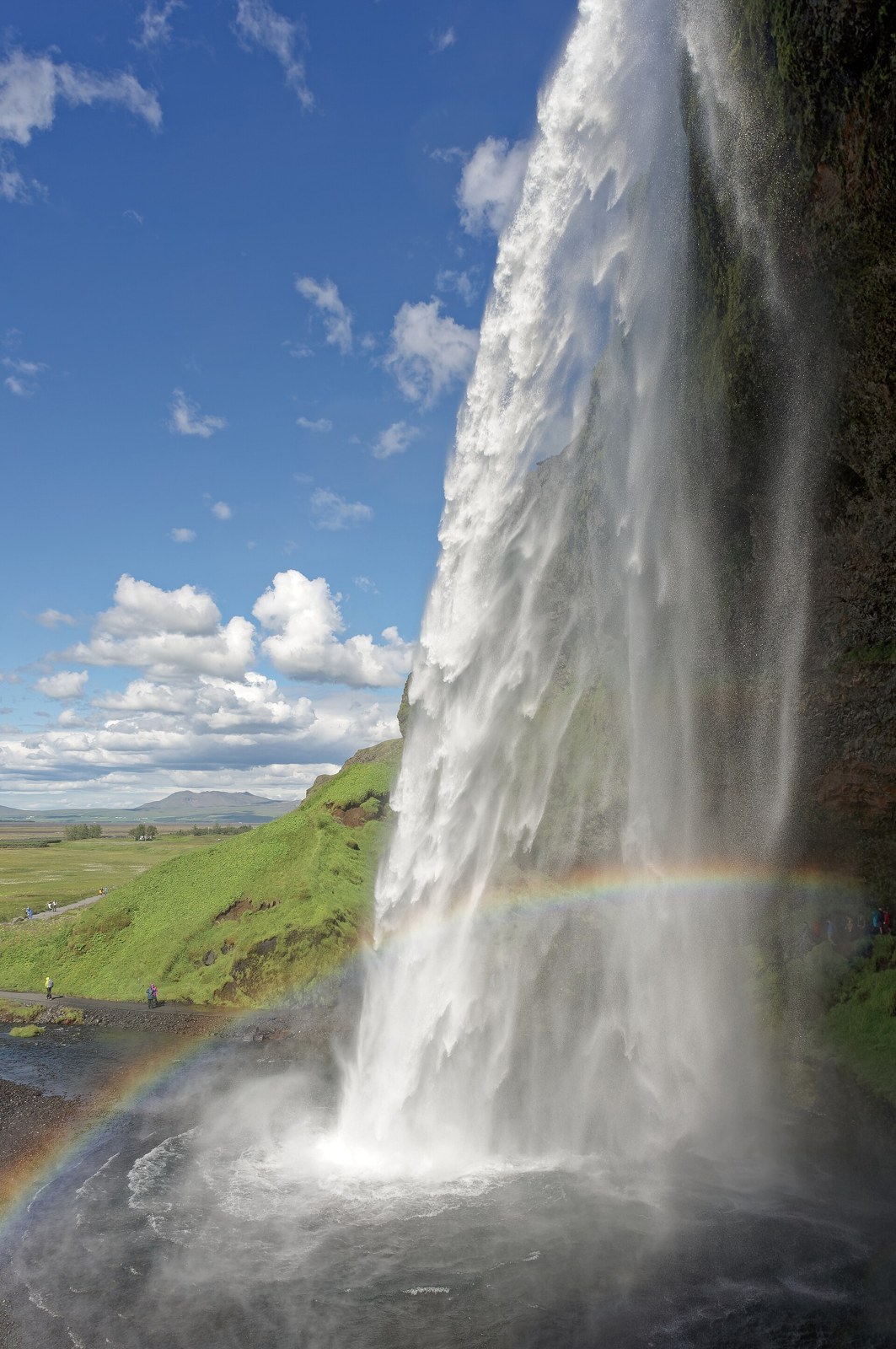
Skogafoss and Seljalandsfoss suit a south coast itinerary, but they should not be treated as interchangeable stops. Skogafoss presents a broad falling sheet against a steep escarpment. Its lower approach lets you appreciate the increasing force of the sound without committing to the staircase beside it. Where steps and upper paths are open, use them only if their condition and your fitness make the climb sensible. The return descent deserves as much attention as the ascent.
Seljalandsfoss is associated with a path behind the falling water. That does not make the route obligatory, continuously open or suitable for everyone. Wet surfaces, spray and seasonal ice can make it unsafe. The front view is a complete experience in its own right. If the rear path is officially open and you choose it, wear waterproof outer layers and keep both hands available for balance. Do not stop in a narrow passage to arrange a long recording while other people wait to pass.
Dettifoss belongs to a different scale of itinerary. In northeast Iceland, its powerful river and canyon setting can justify a regional journey, but not a casual extension of a short Reykjavik stay. Check the access road and the approach you intend to use before setting out. A map showing a road does not establish its current condition or suitability for your vehicle. Seasonal restrictions and weather can change what is practical, including when the rest of your route appears straightforward.
Choose an approach because it is open and appropriate, not because an online photograph promises a better angle. Canyon edges, loose material and spray deserve particular caution. Wind can also mask the water surprisingly effectively. If conditions prevent a comfortable visit, accept that outcome instead of walking farther in search of the expected experience. Building an alternative day in the northeast is more useful than treating Dettifoss as an appointment that must be kept regardless of the weather.
For a first visit, choose either a southwest and south coast focus or a longer journey that genuinely accommodates the north. Waterfalls are scattered widely, and driving between them is part of the trip rather than empty space to compress. Use current route information, realistic rest stops and the available daylight to decide what fits. Avoid arriving tired at a wet, exposed path after trying to recover time lost earlier in the day.
A rental vehicle gives flexibility, but it also makes you responsible for checking road access and understanding the rental agreement. An organized excursion removes some driving decisions, not the need for suitable footwear or judgment on paths. General public transport is not a dependable substitute for a planned waterfall connection. Confirm actual stops and return options before relying on it. If you cannot safely reach a particular waterfall, choose a more accessible experience rather than improvising a roadside walk or unsafe parking stop.
Bring a waterproof outer layer, warm layers that can be adjusted, and footwear with reliable grip. Ordinary rain and waterfall spray can arrive from different directions, so an umbrella is often less useful than a hooded jacket. Carry a dry layer protected inside your bag. In cold conditions, wet gloves can quickly make simple tasks uncomfortable. Keep a phone or camera protected until you have stopped somewhere stable, and do not let concern for equipment distract you from your footing.
If recording sound interests you, make a short test from a designated viewpoint rather than approaching the water. Wind noise may dominate a phone recording; that is a technical limitation, not a reason to cross a barrier. Keep your device secure and avoid leaving equipment where someone could trip over it. People with sensory sensitivities may prefer distant viewpoints or shorter visits. There is no correct amount of time to spend beside a loud waterfall, and leaving early does not diminish the experience.
Check SafeTravel and the official road and weather services before departure and again if conditions change. Iceland's official tourism guidance emphasizes that weather and nature are the central travel challenges, even when everyday personal security feels reassuring. A closed path is not an invitation to assess the danger independently. Stay behind barriers, keep children close and avoid walking toward the water while looking through a screen.
Remain on durable, marked routes rather than widening a muddy path through surrounding vegetation. Do not fly a drone without checking site restrictions and the applicable aviation rules; noise also changes the experience for other visitors. Keep music off speakers and make room for people who need longer to negotiate steps. The best ending is often simple: move back from the busiest viewpoint, take a final look, and leave with enough energy and daylight for the journey onward. A successful waterfall day is one you can adapt without feeling that the landscape owes you access.
Often, yes, but proximity to a car park does not guarantee step-free access or safe surfaces. Check the specific viewpoint, gradient and current conditions. Choose the accessible part of a site rather than assuming you must complete every path. Contact site information services if you need precise mobility details.
It can be atmospheric, but wind, ice, short daylight and closures make the planning more demanding. Keep the route modest and flexible. A waterfall that is accessible in summer may have restricted paths in winter. Never interpret the presence of other visitors as evidence that an icy approach is safe.
A quieter period can help you concentrate, but safe daylight, road conditions and sufficient rest matter more than an early start. Check opening arrangements where relevant and do not drive tired. You can also find a calmer experience by waiting patiently at a permitted viewpoint rather than seeking an unofficial route.
Verify opening arrangements, transport, access rules and safety information with official sources. We omit numerical budget ranges where reliable current figures have not been verified.
Keep exploring
Choose a performance for the listening experience, understand the practical arrangements, and give the musicians your attention.
Choose a valley, understand the mountain conditions, and give this complex landscape more than a hurried photograph.
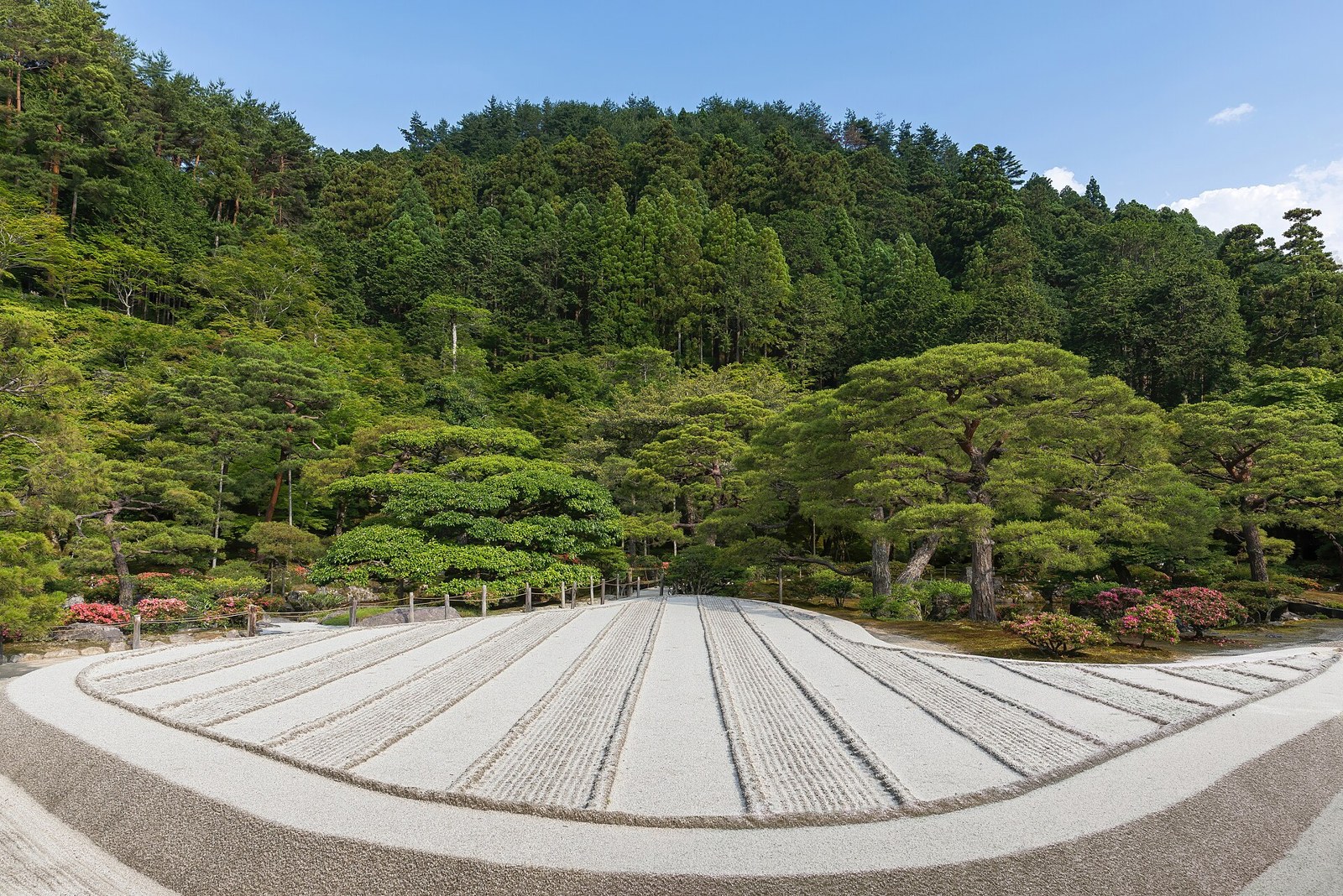
An attentive approach to Kyoto gardens, with time for framing, seasonal change and the rules that protect quiet spaces.


