TASTEBologna, Italy
A taste of Bologna, beyond the familiar
Explore pasta, market shopping and the practical pleasures of eating in a working Italian city.
8 min readRead story
A thoughtful route through Oaxaca’s food markets, balancing appetite with practical questions and respect for working stalls.
By Journey Into Wellbeing editorial team
Published: November 11, 2026
Updated: November 11, 2026
9 min read
The drier part of the year can simplify walking, while the rainy season calls for flexible afternoons. Festivals bring extra demand and altered routines; verify local arrangements.
Arrive through Oaxaca’s airport or an intercity bus terminal, then use authorised transport to your accommodation. Central markets can be reached on foot from much of the historic centre, depending on mobility and location.
Oaxaca’s markets are places to buy dinner ingredients, eat a meal, run a business and meet other people. They are not open-air museums arranged around a visitor’s appetite. Begin with a simple goal, such as breakfast or buying fruit, rather than trying to taste everything before lunch. Walk an aisle without photographing it and notice where customers order, how goods are displayed and which spaces need to remain clear. A modest purchase and a courteous exchange often teach more than collecting a series of dramatic food images.
The state tourism authority lists several city markets, including Benito Juárez, 20 de Noviembre, La Merced and Sánchez Pascuas. That range is a reason to slow down, not an invitation to rush through them all. Choose one market for a proper first visit and return if you enjoyed it. Different stalls have different schedules, and a general building opening time does not guarantee that a particular cook or seller will be there. Ask locally about the item you want before planning your day around it.
Benito Juárez market is in the central city close to the Zócalo, making it a practical place to combine shopping with a wider walk. The state tourism authority describes its location and long commercial history. Rather than attempting a complete inventory, choose something you would actually use or eat. Ask how a cheese should be stored, how a paste is prepared, or whether a packaged ingredient contains anything you cannot eat. Let the answer guide the purchase.
Quesillo is an interesting starting point if you eat dairy, but remember that it is perishable. Buy an amount suited to your plans and seek clear storage advice. For dried ingredients or prepared sauces, confirm the contents, especially where nuts, sesame or other allergens may be involved. Do not assume a dark sauce has one fixed recipe. Ask permission before tasting, and accept a refusal without argument. If you are only looking, make space for customers who are ready to buy rather than holding the seller in a long conversation during a busy period.
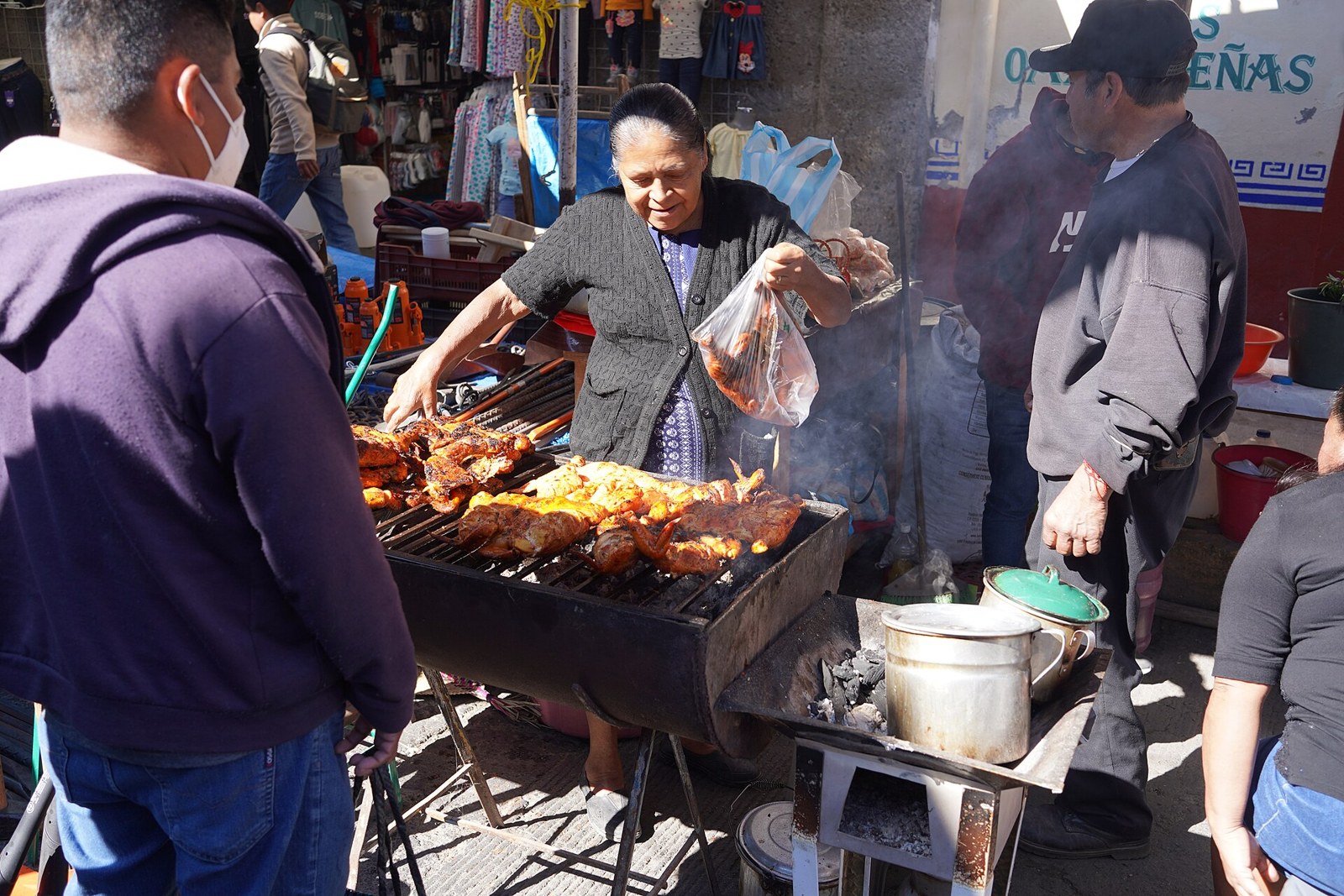
The tourism authority presents Mercado 20 de Noviembre as a long-established place for local gastronomy and products including chocolate, mole and cheese. It is a useful setting for a meal, provided you look at the actual stall rather than expecting the whole market to operate as one restaurant. Find out who takes the order, where you may sit and when payment is expected. If several vendors are involved in different parts of a meal, confirm which items each person is supplying.
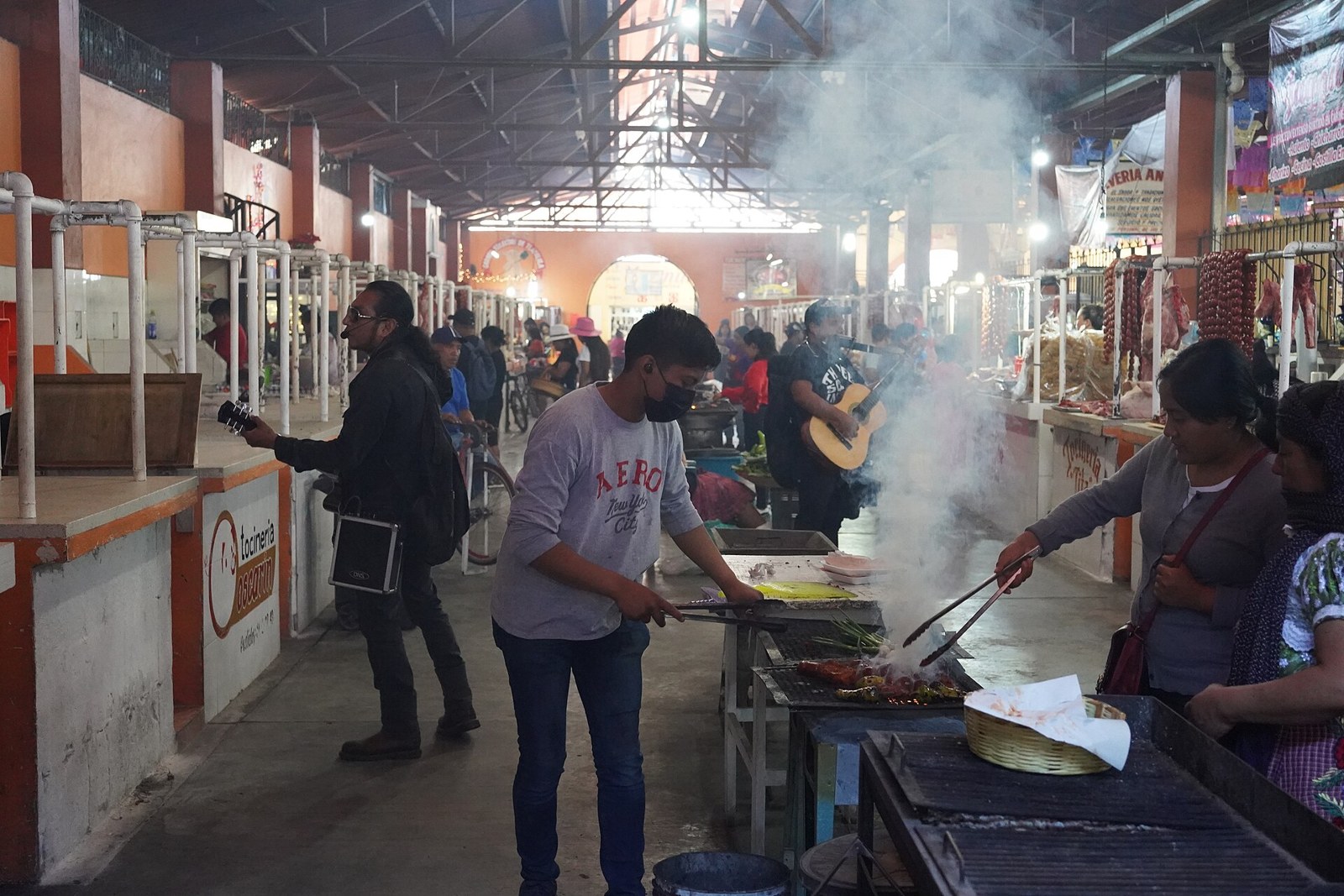
In a grill area, check whether meat, accompaniments, tortillas and drinks are ordered together or separately. Ask the price and portion before the food is cooked, without treating ordinary clarification as adversarial bargaining. Smoke and heat can be uncomfortable, especially for visitors with respiratory conditions; choose another area if necessary rather than enduring it for a photograph. Keep loose clothing and bags away from cooking surfaces. Once seated, avoid spreading possessions across space needed by other customers, and do not block servers carrying hot food through narrow passages.
A tlayuda is worth approaching as a complete preparation rather than a checklist item. Ask what comes on the version in front of you, whether it is folded or open, and what portion suits your appetite. Beans, cheese, fats, meat and accompaniments can vary, and a seemingly vegetable-based dish may not suit a vegetarian diet. Explain your needs before ordering. Asking for an adaptation is reasonable, but staff may not be able to change ingredients that are already prepared. Accept that limitation and look for a suitable alternative.
Chocolate provides another useful conversation. Ask whether a product is intended for drinking or eating, whether sugar or spices are already included, and how the seller recommends preparing it. For mole, learn what the purchased form requires before it becomes a finished dish. A paste is not necessarily ready to spoon onto a meal. If chapulines interest you, ask about seasoning and allergens, and taste only if you are comfortable. There is no cultural achievement in forcing yourself to eat something or pressuring a companion to do so.
No market, famous or otherwise, can offer an automatic guarantee about every individual food purchase. Look for food prepared and stored appropriately, utensils handled sensibly and cooked dishes served hot. A busy stall can be a useful observation, but popularity alone is not a safety certificate. Wash your hands when possible and carry a suitable backup for occasions when facilities are unavailable. Choose drinking water from a reliable source, and ask about water and ice when that matters to your health decisions.
Raw garnishes, peeled fruit, dairy and foods held without appropriate temperature control deserve particular thought. If you have a serious allergy or medical vulnerability, discuss the trip with an appropriate health professional and be conservative where ingredients or preparation cannot be confirmed. Translation can help explain an allergy, but it cannot create a separate preparation area. Do not interpret a friendly nod as a detailed assurance about cross-contact. Carry necessary medication according to your medical advice and know how you would obtain help if a reaction or illness occurred.
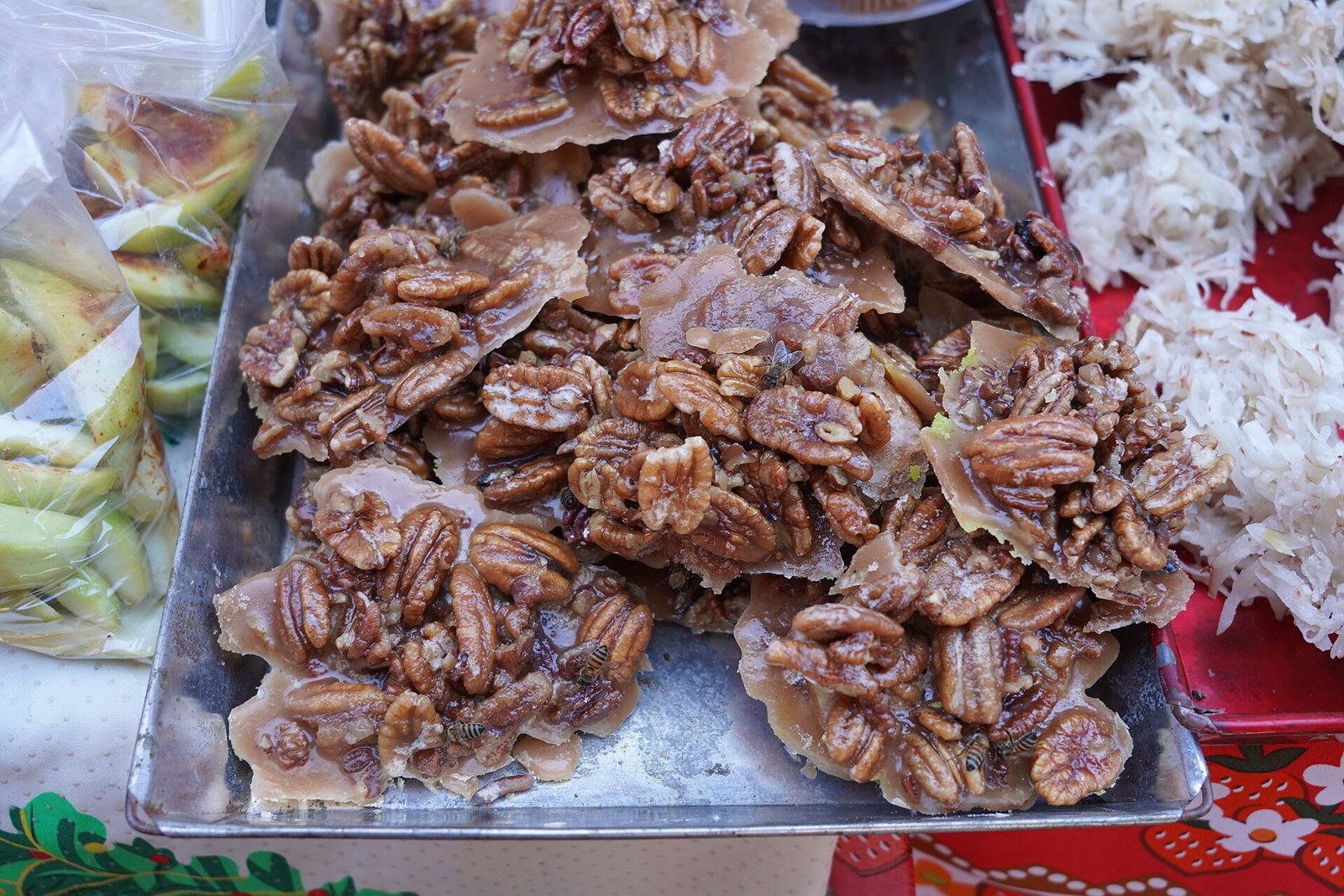
Ask before making close photographs of vendors, cooks or customers, particularly children. Buying something does not purchase someone’s image or unlimited time. A refusal needs no explanation. If you want a picture of a display, ensure you are not blocking business or leaning over uncovered food. Avoid treating clothing, language or Indigenous identity as a decorative backdrop. Oaxaca contains many distinct communities and food traditions, and an individual seller should not be expected to speak for all of them or provide a free cultural lecture.
A greeting and a clear question are useful even with limited Spanish. Pointing can help, but confirm quantity and preparation before the seller begins. Have an appropriate payment method ready and keep cash discreetly organised. Bargaining should not be assumed appropriate for prepared meals or everyday groceries. Ask the price, decide whether it suits you and decline politely if necessary. When someone helps you navigate the transaction, thank them without turning the interaction into a performance for a camera. Courtesy works best when it is ordinary and reciprocal.
Central markets can fit into a walking day, but allow for heat, uneven surfaces, crowded entrances and sudden rain. Wear shoes suitable for wet paving and keep both hands available when moving through busy aisles. Secure your valuables without constantly displaying cash or a phone. If you are tired, carrying purchases or returning after dark, arrange transport through a reliable channel rather than improvising solely on the basis of an unsolicited offer. Check current local advice for any market outside your familiar route before setting off.
For a first day, arrive hungry enough for a real meal, eat slowly and leave room to return another time. Do not combine every unfamiliar dish with alcohol and an ambitious afternoon outing. Seasonal rain may make a covered market appealing, but getting there and back still requires thought. Festival periods can change demand, traffic and accommodation availability, so keep arrangements flexible and avoid assuming ordinary routines will hold. A quieter day can be better for questions, provided the sellers you want to meet are actually working.
Before buying edible souvenirs, check storage requirements and the import rules for your destination. Meat, dairy, fresh produce and some plant products can be restricted even when commercially wrapped. Ask for accurate ingredient information, retain the packaging and do not rely on another traveller’s uneventful border crossing as evidence of legality. Fragile foods also need a realistic plan for the journey. If you cannot transport something safely, enjoy it locally instead. Leaving with an understanding of how an ingredient is used can be more valuable than leaving with a heavy bag.
If you return to a stall, let familiarity develop without assuming special treatment. You may recognise a dish or understand an ordering routine more clearly the next time. That is the real advantage of visiting one market at a time: you can compare your own experience rather than pronounce on the entire city after a hurried circuit. Describe what you actually ate and where uncertainty remained. Oaxaca’s markets deserve curiosity grounded in ordinary respect, with room for the people who depend on them long after your visit ends.
Often there are possibilities, but ask about lard, broth, sauces and toppings as well as visible meat. A dish with beans or vegetables is not automatically vegetarian. For strict requirements, choose a vendor able to explain the preparation clearly rather than relying on appearance.
Do not assume that bargaining is expected. Ask the price and portion before ordering, then decide whether to buy. Clarifying separate charges is sensible; pressuring a cook to reduce an ordinary meal price is a different matter.
Check airline carriage rules and, separately, the destination country’s food import requirements. Ingredients and consistency can matter. Keep original labelling where available, declare food when required and do not buy a large quantity before confirming that transport and entry are allowed.
Verify opening arrangements, transport, access rules and safety information with official sources. We omit numerical budget ranges where reliable current figures have not been verified.
Keep exploring
Explore pasta, market shopping and the practical pleasures of eating in a working Italian city.

Choose a valley, understand the mountain conditions, and give this complex landscape more than a hurried photograph.
An attentive approach to Kyoto gardens, with time for framing, seasonal change and the rules that protect quiet spaces.


