SIGHTDolomites, Italy
The Dolomites, a landscape worth slowing down for
Choose a valley, understand the mountain conditions, and give this complex landscape more than a hurried photograph.
8 min readRead story
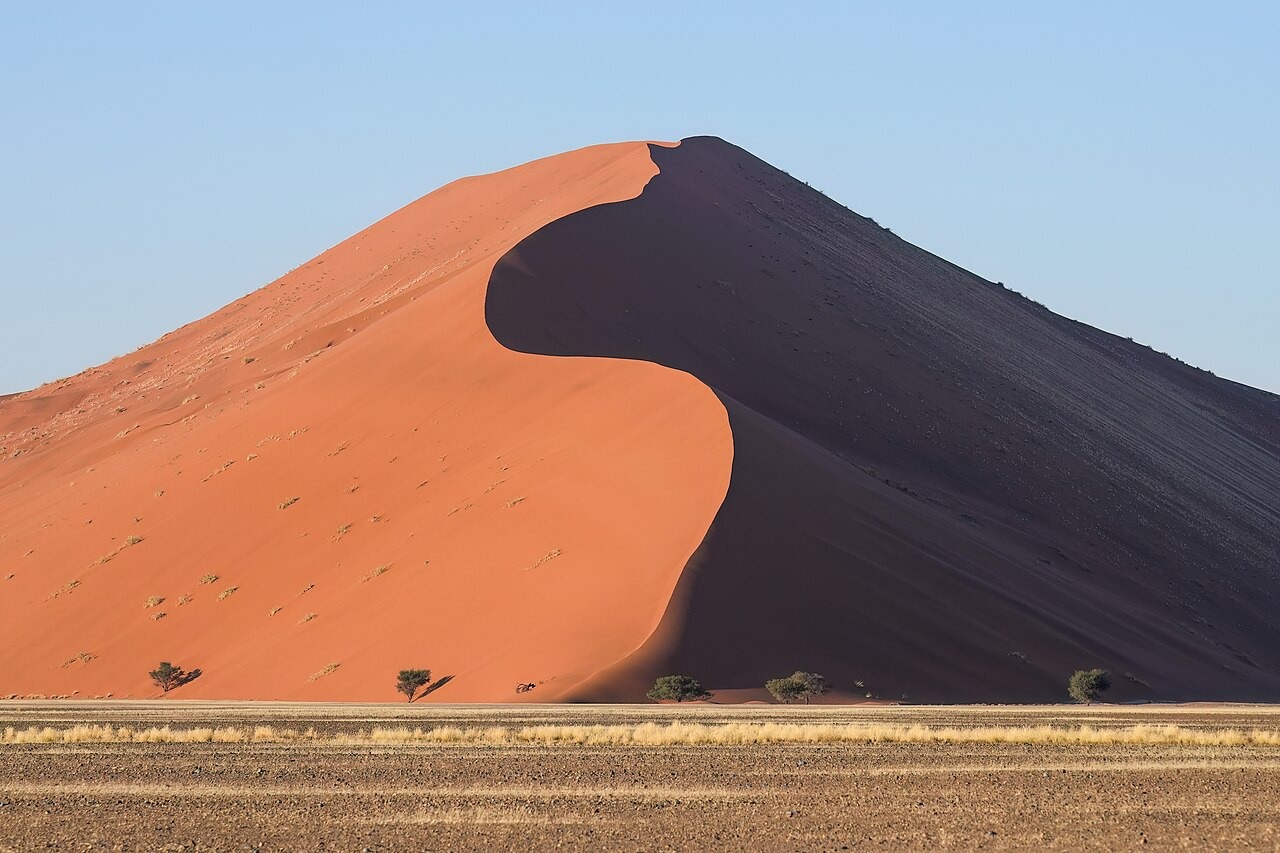
The Namib dunes reward a change of scale. From a distance, their ridges seem clean enough to draw with a ruler; close up, the surface holds ripples, tracks and little interruptions in the wind’s work. Around Sossusvlei, pale pans and dark tree forms sharpen the contrast with the sand. Come to look carefully rather than collect a summit photograph. With thoughtful transport, realistic walking plans and respect for the protected landscape, a desert morning can reveal far more than its most familiar silhouette.
By Journey Into Wellbeing editorial team
Published: November 11, 2026
Updated: November 11, 2026
9 min read
The cooler months, broadly May to September, are a practical starting point for planning, though mornings can be cold and daytime sun remains strong. In hotter months, shorten exposed walks and seek current local advice. Weather, road conditions and gate arrangements should determine the final itinerary.
Windhoek is a common starting point for a road journey to Sesriem, the gateway to Sossusvlei. Arrange a suitable rental vehicle or licensed operator, confirm the route and allow generous daylight driving time. Ask separately about the sandy final approach and available transfers.
Sossusvlei belongs to the Namib Naukluft protected landscape, where dunes, pans and the course of the ephemeral Tsauchab River meet. Namibia’s environment ministry identifies Sossusvlei, Deadvlei and Sesriem Canyon among the area’s principal attractions. These names describe different places, not alternative labels for one viewpoint. Knowing that before arrival helps you resist the temptation to squeeze every photograph into a single hurried stop.
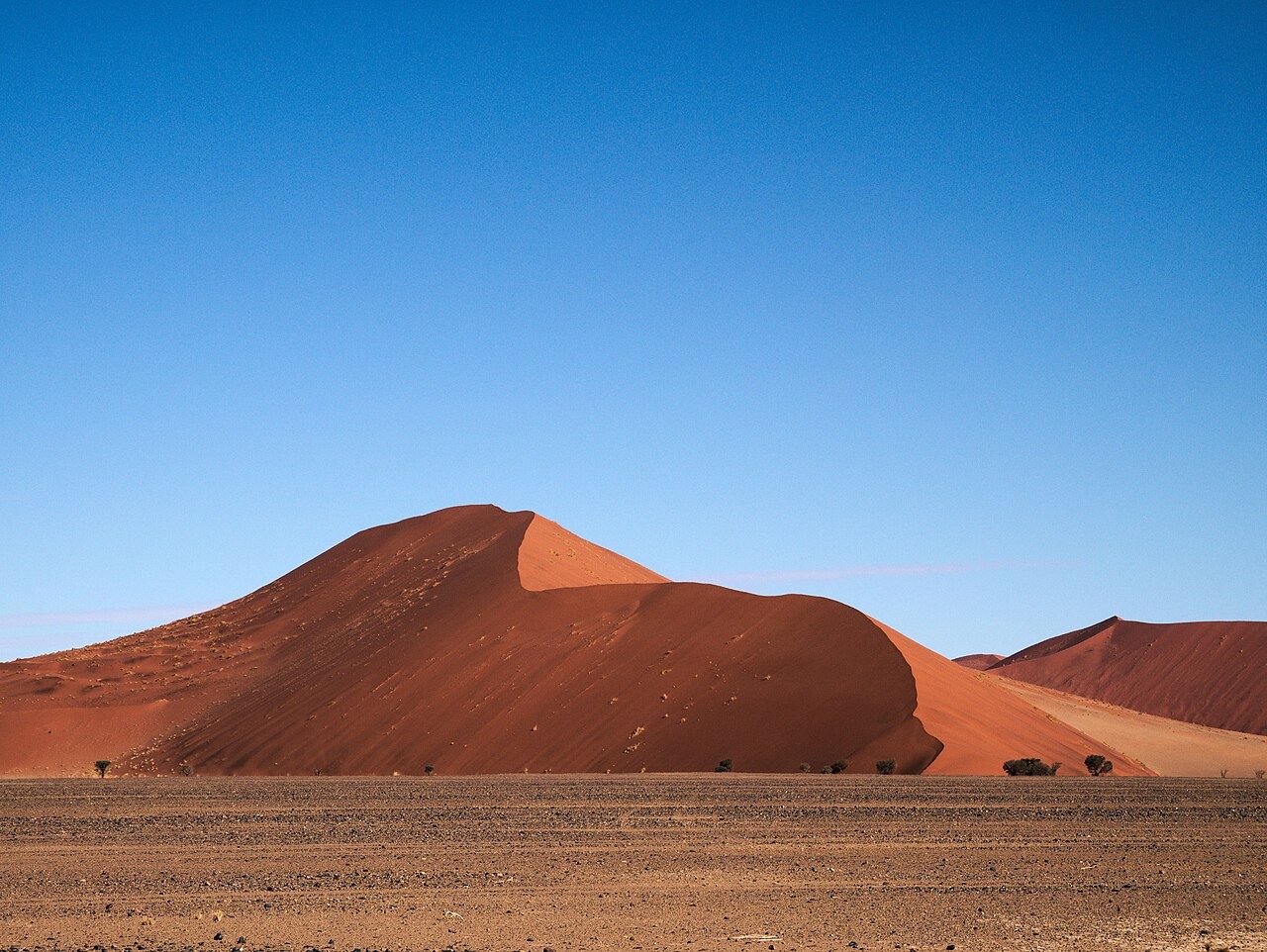
Begin by looking across the dunes from a permitted stopping place. Follow one ridge with your eye, then notice the slopes that face away from the light. A surface that first appears uniformly orange separates into shaded planes and illuminated edges. There is no need to claim that a particular dune is the tallest or oldest to make the scene compelling. Its interest lies in relationships you can actually see: the line of a crest, the flatness of a pan and the smallness of a person beneath them.
A pan changes how the dunes are read. On the approach, sand occupies much of the view; at the pan, the pale ground creates space around it. Slow down before raising the camera and identify the permitted route back. The openness can make distances deceptive, particularly when heat and bright light remove familiar visual references. Your outward walk should always leave enough energy and water for the return.
Avoid treating a photograph of an empty pan as an instruction to erase everyone else from the experience. Other visitors are entitled to be there, and waiting respectfully is better than asking strangers to leave a public view. If a scene is busy, study its edges or use the human scale in the composition. The desert does not become less remarkable because someone else has arrived to see it.
The official ministry brochure describes Sossusvlei as a clay pan at the end of the ephemeral Tsauchab River. That relationship is worth holding in mind even when the surface is dry. This is not simply sand arranged around an empty centre: occasional water is part of the explanation. Ask a guide about the conditions visible during your visit rather than expecting to witness flowing water or a flooded pan.
At Deadvlei, dark tree remains against pale ground are as important to the composition as the dunes beyond. Leave the wood untouched, do not climb or lean on it, and follow local access instructions. A low camera angle can make a strong image without entering a restricted area. Photographing a fragile feature should not require rearranging it, collecting a fragment or leaving marks to make your own visit more visible.
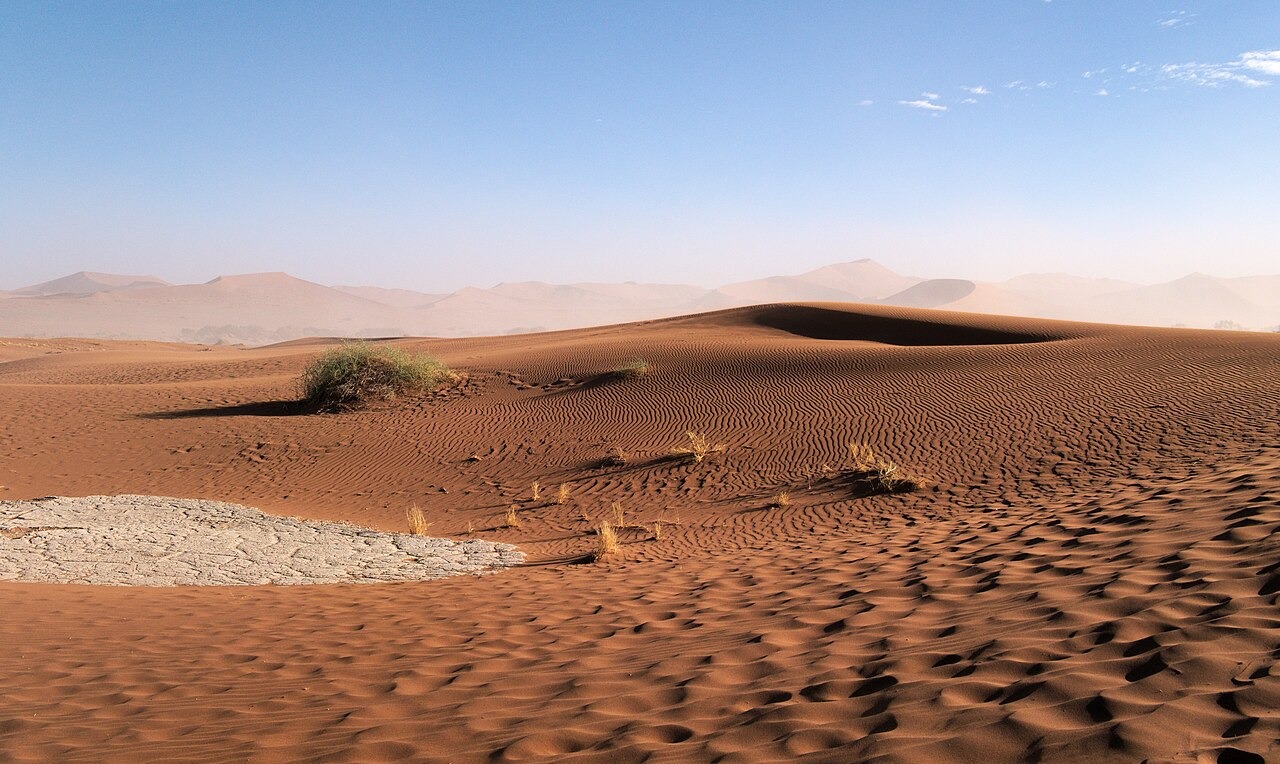
Walking uphill on sand is a different undertaking from strolling the same apparent distance on a firm path. Footing shifts, progress can be slow and the summit may look closer than it feels. Before starting, agree on a turnaround point and a latest return time. A partial ascent can offer an excellent reading of the landscape without the effort and exposure of reaching the highest visible crest.
Ask staff which dunes and approaches are appropriate that day, and keep your group together. Do not assume that another visitor’s route is authorised or sensible. Carry water with you rather than leaving it in the vehicle, wear sun protection and use footwear suitable for hot sand and the planned walk. If someone becomes unwell or struggles with the conditions, abandon the ascent. The view is not an obligation, and descending earlier is sound judgement rather than a failed experience.
Early and later light can reveal the folds of a dune more clearly than overhead sun. The practical constraint is access: confirm current gate hours, driving rules and any accommodation specific arrangements directly with the park or your operator. A room near Sesriem does not automatically provide the same access as every other property. Do not build a sunrise promise around an unverified booking description.
Once inside, allow for the journey between the gate, parking and your chosen walking area. If the first light is already gone when you arrive, look for another quality in the scene rather than speeding to recover a lost picture. Wind may soften visibility, shadows may change quickly and cloud may alter colour. All are reasons to observe what is present. Keep enough time to exit legally and without rushing the return drive, especially after a physically demanding morning.
Getting to Sesriem and reaching the pans are separate transport decisions. The approach includes a sandy final section for which vehicle suitability and driving competence matter. Confirm the current parking and transfer arrangements before committing to self driving all the way. Namibia Wildlife Resorts lists a transfer service associated with Sesriem; ask about present availability, departure arrangements and what the quoted service actually covers.
A vehicle described as capable is not a substitute for the rental company’s permission or your own experience. Check insurance terms, restrictions on sand driving and the procedure for assistance. If uncertain, use an authorised transfer rather than testing your skills in unfamiliar terrain. On the wider road journey, carry the supplies recommended by your operator, download navigation information and allow room for delays. A map’s estimated arrival time should not be treated as a guarantee on remote roads.
Sesriem Canyon offers a different scale from the dune landscape. Namibia Wildlife Resorts describes a narrow gorge shaped by erosion, with pools replenished after good rains. The attraction is not another enormous horizon but the closer relationship between rock, shade and the channel below. Ask about current access and weather before entering, since a dry looking landscape is not a reliable guide to conditions elsewhere in a drainage area.
Treat the canyon as an optional separate outing, not the compulsory final item after a long exposed walk. Uneven surfaces, the return climb and changing conditions deserve fresh attention. If energy is low, a quieter afternoon near your accommodation may be the better choice. Rest also leaves time to prepare supplies, confirm the next day’s departure and discuss what you have seen with someone who knows the area. A well paced itinerary makes these less dramatic decisions possible.
The desert visit costs more than a park admission. Accommodation, fuel, vehicle hire, transfers, guiding and meals can all shape the total, while distance reduces the usefulness of last minute shopping around. Compare the complete arrangements rather than choosing solely on a nightly room rate. A less expensive bed far from your intended start can add driving, fatigue and another early departure to the trip.
Camping may suit travellers with appropriate equipment and experience, but it is not automatically the simplest option. Confirm facilities, food arrangements and what must be brought from elsewhere. Ask operators whether park charges, sandy section transfers and drinking water are included, and obtain current written quotes instead of relying on old published prices. Sharing a legitimate guided outing can be practical, particularly when it removes uncertainty about driving and access. Spend on the parts of the trip that protect your margin for error.
The Namib is not an empty stage awaiting visitors. Namibia’s official Sossusvlei material draws attention to animals adapted to desert conditions, including beetles and lizards. Watch for small signs of movement without chasing wildlife or disturbing the surface to produce an encounter. Keep food secured, take litter away and leave stones, wood and sand where they belong. A close photograph is not worth damaging the very detail that attracted your attention.
People also give the journey its context. Pay fairly for guiding, listen to locally grounded explanations and ask before photographing staff or other residents. Avoid describing the wider region as uninhabited simply because the view contains few buildings. At the end of the visit, the most useful souvenir may be a more precise vocabulary: pan rather than blank space, ridge rather than mountain, and a permitted walk rather than a conquest. Careful looking makes the landscape richer without requiring you to possess any part of it.
Cooler months are often easier for exposed walking, but no season removes the need for water, sun protection and a realistic turnaround. Confirm conditions locally and adapt the day to the least comfortable person in your group. A shorter walk in suitable conditions is better than forcing a fixed itinerary.
Do not assume that your road vehicle is suitable for the sandy final approach. Ask the park, rental company and accommodation about current requirements and authorised transfers. Even a suitable vehicle requires experience and appropriate rental permission. Using a transfer can separate the main road journey from the sand driving decision.
Yes. The relationship between dunes, pans and light can be appreciated without a demanding summit ascent. However, access to particular views may still involve sand walking and heat exposure. Describe your mobility needs to an operator before booking and ask exactly how far each proposed stop requires you to walk.
Ask for written clarification of what your accommodation or tour actually permits. Gate rules, travel time inside the park and walking time all affect where you can be at first light. Do not assume that a property described as near Sossusvlei guarantees unrestricted access, and never bypass a closed gate.
Verify opening arrangements, transport, access rules and safety information with official sources. We omit numerical budget ranges where reliable current figures have not been verified.
Keep exploring
Choose a valley, understand the mountain conditions, and give this complex landscape more than a hurried photograph.
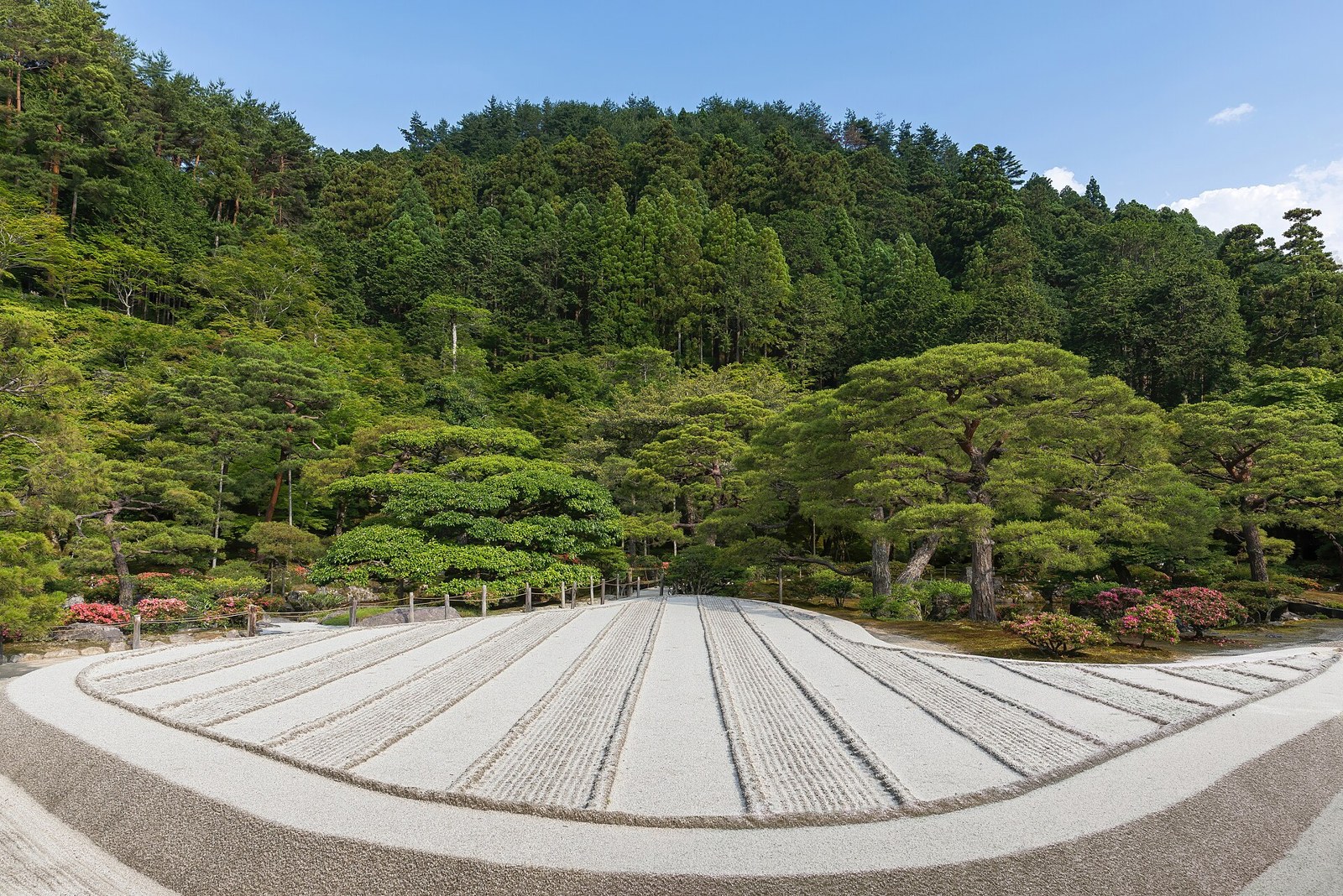
An attentive approach to Kyoto gardens, with time for framing, seasonal change and the rules that protect quiet spaces.
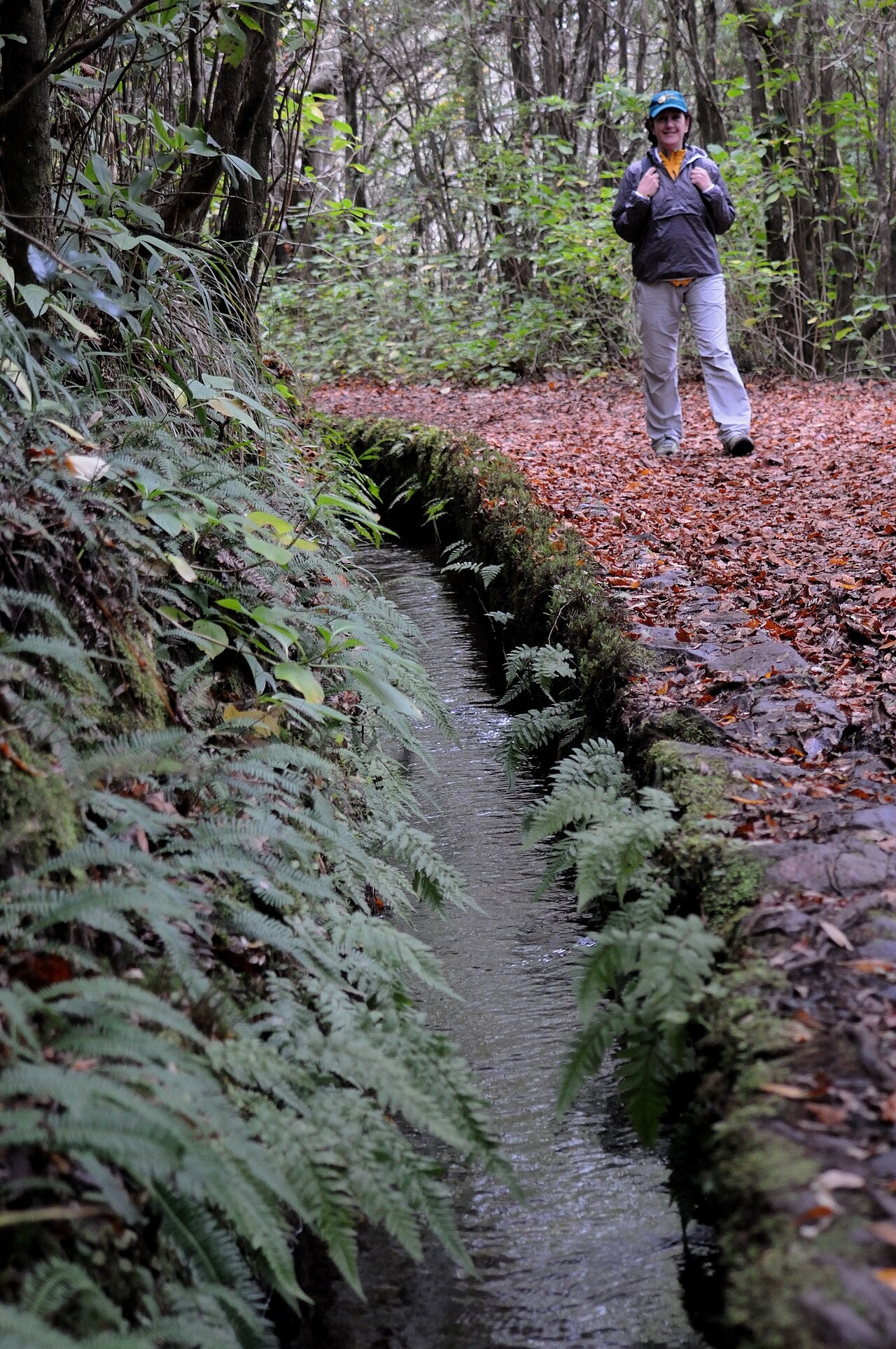
On a levada path, Madeira reveals itself at the speed of running water. A narrow channel slips around a hillside, trees lean across the walking line, and a break in the canopy suddenly opens an entire valley. These are working landscapes rather than scenery arranged for hikers. Water infrastructure, cultivated slopes and forest occupy the same frame. The most rewarding visit is not a race towards a famous waterfall, but a carefully chosen walk that lets you notice how the island holds together.


