TOUCHBudapest, Hungary
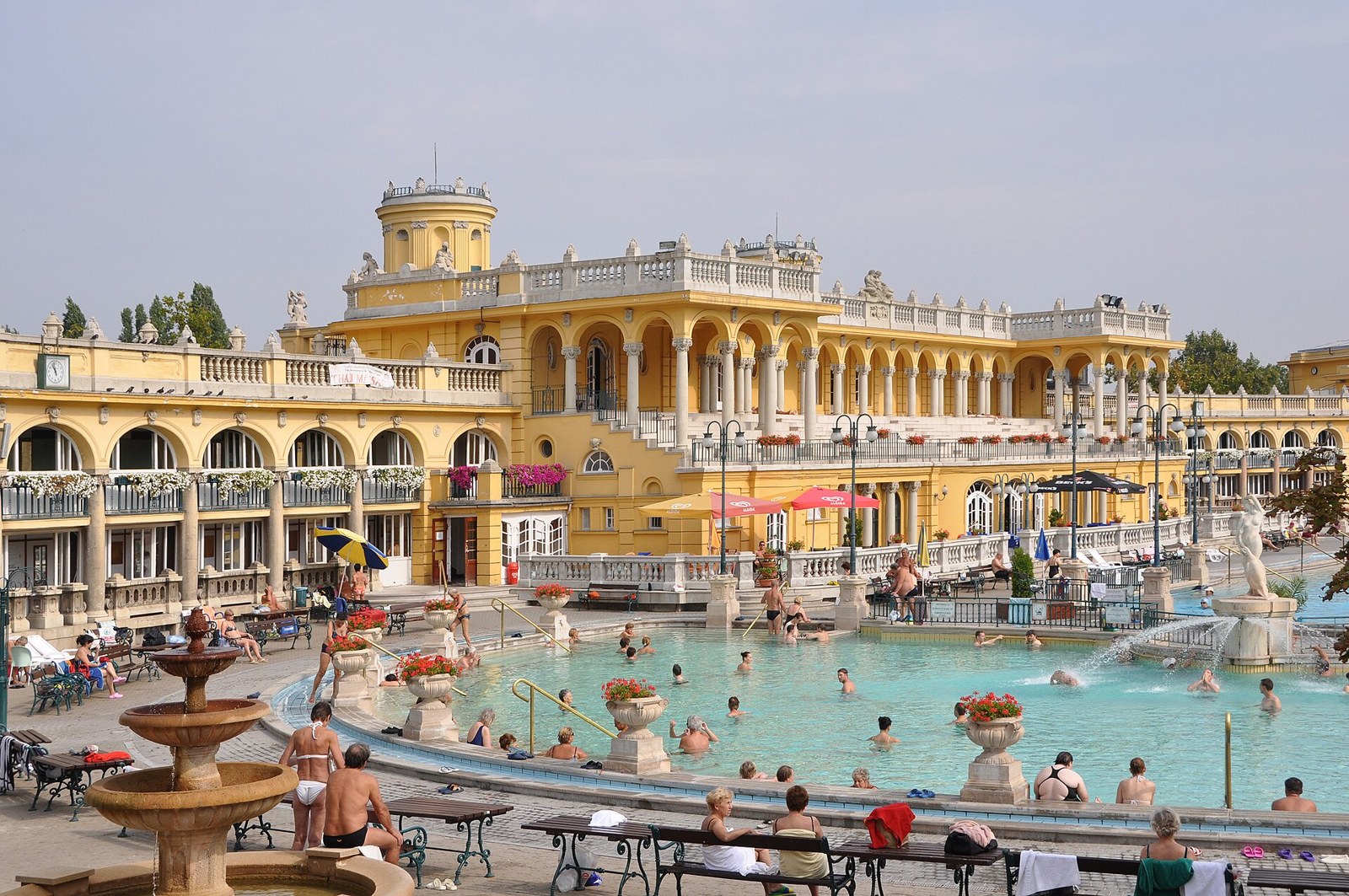
Budapest and the ritual of thermal bathing
Approach Budapest bathing as a deliberate sequence of arrival, washing, warmth and rest, with venue rules and personal limits at the center.
8 min readRead story
Meet the materials and working skills of Fez through careful observation, permission-based handling and thoughtful purchases.
By Journey Into Wellbeing editorial team
Published: November 11, 2026
Updated: November 11, 2026
8 min read
Spring and autumn often suit extended walks. Summer heat and winter rain require adjustments, and religious calendars can affect opening patterns.
Fez is served by an airport and rail connections. Continue to an appropriate medina access point, then expect to walk; confirm luggage and access arrangements with your accommodation.
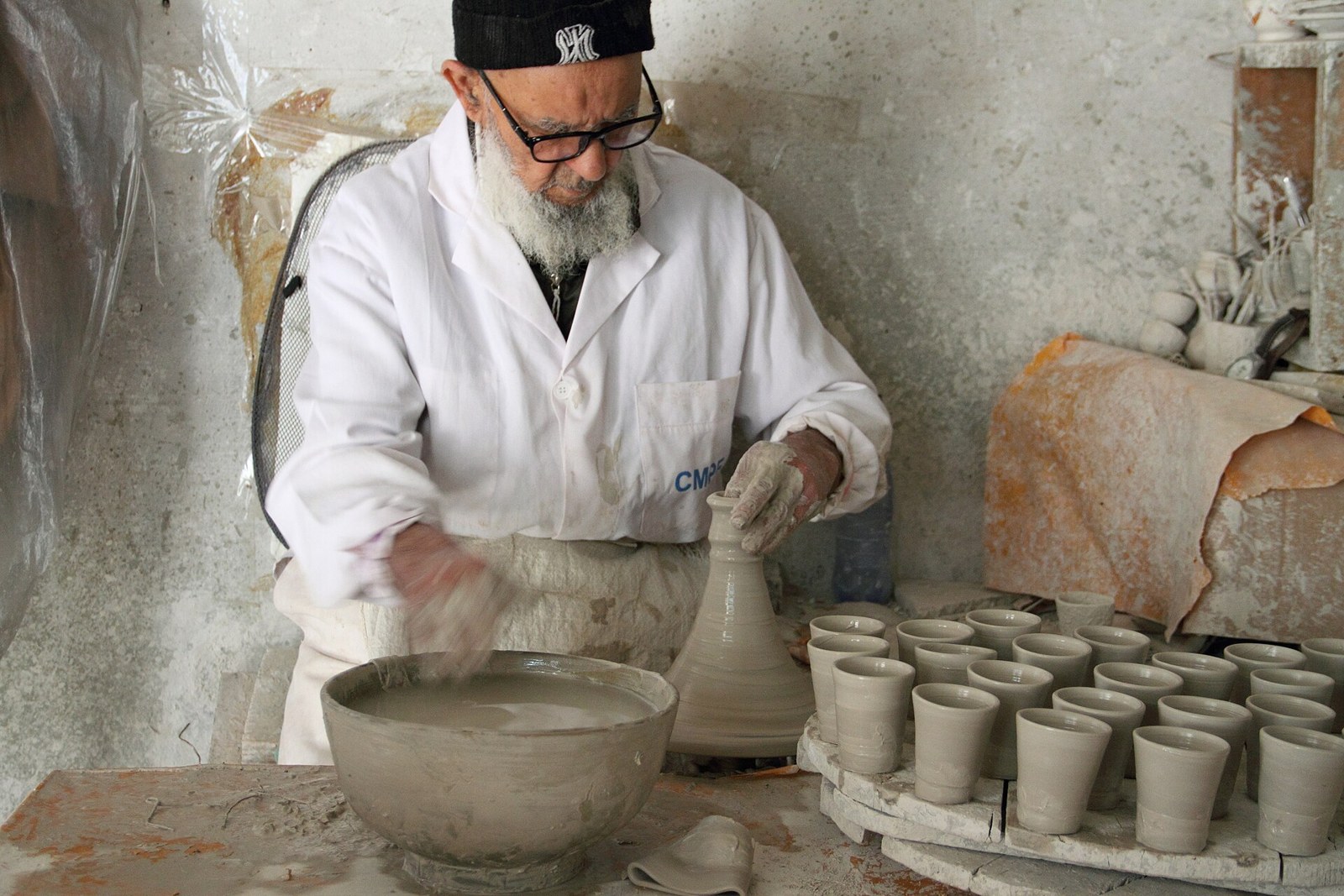
The craft appeal of Fez begins with the fact that work and everyday life share the medina's narrow streets. A doorway may open onto a small production space, but that does not make it a public demonstration. Begin by observing from a place that leaves the passage clear. Ask before entering and accept that a worker may be busy, a room may be unsafe or a shop may not welcome close photography. Respect creates a better encounter than trying to collect access to every process.
Touch is a useful theme here, provided it starts with permission. Clay, leather, wood and metal invite different questions about weight, finish and use, but raw materials, tools and unfinished pieces should not be handled casually. Ask which finished sample you may examine. The Moroccan National Tourist Office identifies woodworking around Nejjarine and the blue ceramics associated with Fez among the city's shopping traditions. Use those associations as starting points for inquiry rather than proof of where any individual object was made.
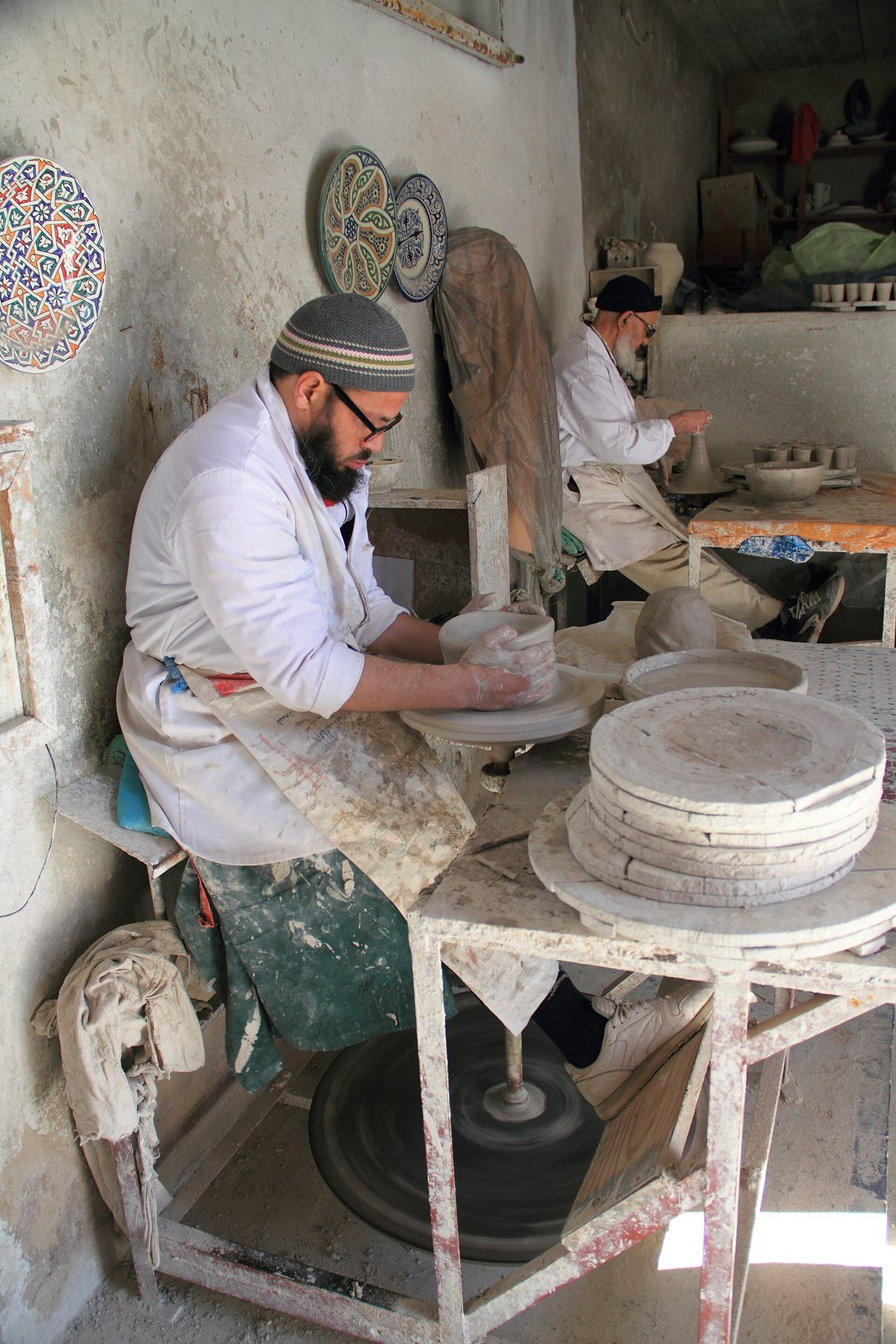
A ceramic piece can reward close attention even when you know little about the technique. With permission, feel its weight, look at the rim and base, and examine how the decoration follows the shape. Small variations may reflect handwork, but irregularity by itself does not prove quality or local origin. Ask where the object was formed, decorated and fired. A seller may be able to distinguish workshop production from pieces brought in for resale; listen for specific answers rather than relying on the appearance of the shop.
Decide whether you want a decorative object or something for serving food. Ask directly whether the glaze and intended use make it suitable for food contact, hot liquids or washing in the way you expect. Do not assume that every attractive bowl is appropriate for daily use. For a substantial purchase, request relevant product information rather than accepting a broad reassurance about tradition. If the answer remains uncertain, choose a decorative role or leave the piece behind. Practical suitability is part of appreciating craftsmanship, not a distraction from it.
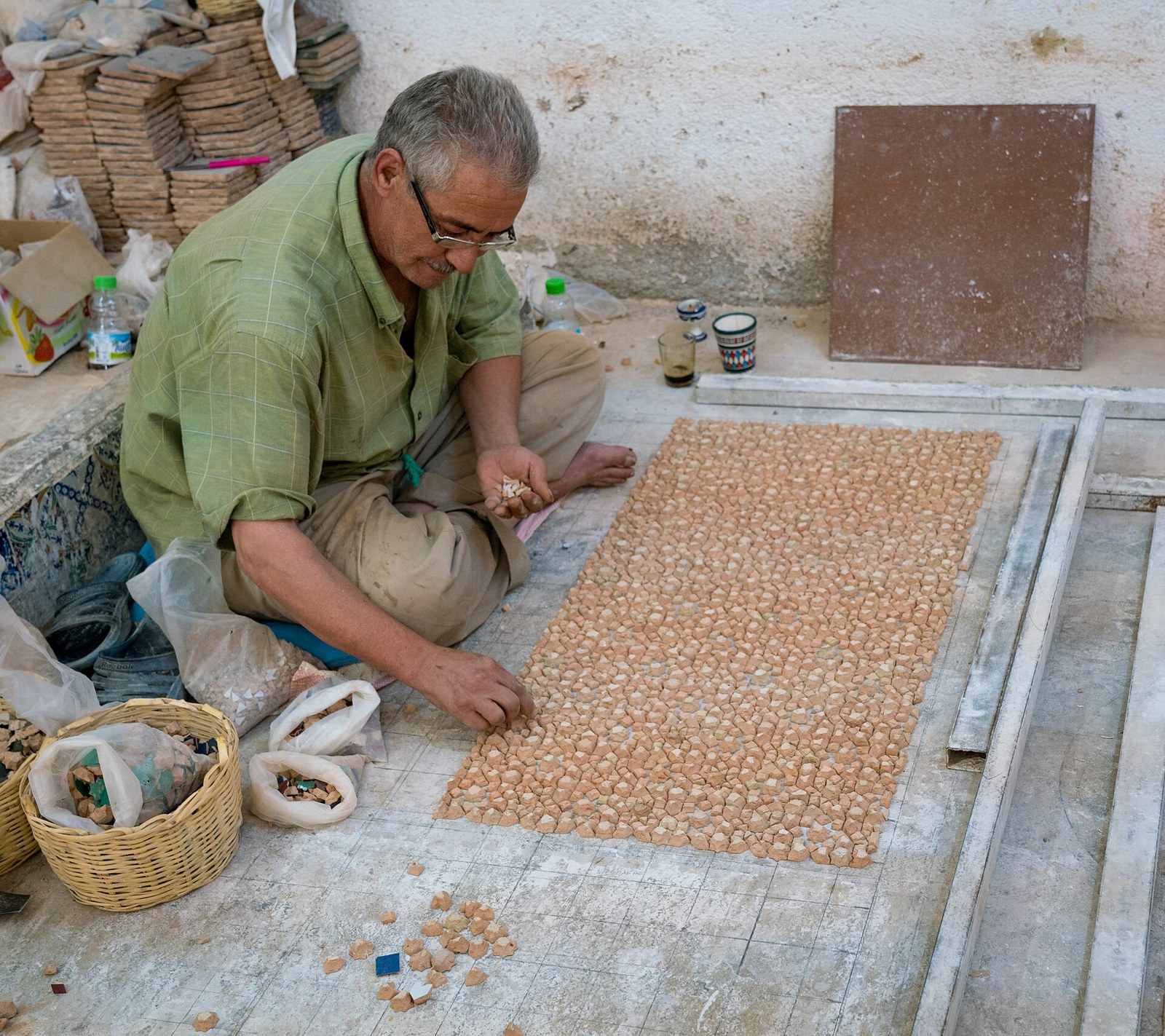
Zellij is associated with geometric tilework assembled from shaped pieces. In Fez, looking closely at an authorized display or a building open to visitors can reveal how many small decisions contribute to a continuous pattern. Follow a line across joins and notice how edges meet. You need not touch an architectural surface to understand its precision. Historic decoration is especially unsuitable for rubbing, tapping or testing with a fingernail, regardless of how durable it appears.
If you encounter a workshop demonstration, stay where instructed and do not approach cutting or shaping work without an invitation. Fragments, sharp edges and dust are practical reasons to maintain distance. For a small purchased panel or table, ask about weight, backing and transport before becoming attached to the design. A piece that looks manageable in a courtyard may be difficult to carry safely or accommodate at home. Clarify whether the price covers the displayed object, a made-to-order version or a different size, and record the agreed details.
Around woodworking areas, the most useful questions concern material, construction and intended function. Ask what wood is being used and whether a piece is solid, veneered or assembled from different materials. If invited to handle a box, check how the lid opens and closes without forcing it. A carved surface can be beautiful while an object remains unsuitable for your intended use. Smell or color alone is not a reliable way for a visitor to identify a species or establish sustainability.
Metalworking invites a different kind of attention. Watch from outside the active work zone and keep clear of tools, hot surfaces and sharp edges. Ask whether a vessel is decorative or intended for food or drink, and what maintenance its finish requires. Do not infer that a shiny surface is a particular metal or that an aged appearance means an antique. When a claim matters to the purchase, request a clear description on the receipt. This is more useful than trying to judge material composition through an improvised touch test.
Fez's tanneries are widely associated with views over working vats, often reached through businesses. Before following an invitation upstairs, clarify whether there is an access fee, a purchase expectation or a proposed guided service. You should be able to understand the arrangement before committing to it. A viewing terrace does not automatically include access to the working area. Stay on the permitted route, keep children close and do not lean over walls or barriers for a photograph.
Strong odors can make the visit uncomfortable, and a sprig of mint is not protective equipment. Leave if you feel unwell rather than treating endurance as part of cultural appreciation. Photograph workers only with appropriate permission and avoid framing hazardous or demanding labor as a spectacle detached from the people doing it. When considering a leather item afterward, inspect stitching, lining, closures and flexibility where handling is allowed. Ask about care and color transfer. The view over a tannery is not evidence that every item in the shop was produced there.
The medina is best approached on foot with a realistic sense of orientation. Save the name and location of your accommodation and identify a recognizable access point before setting out. Downloading a map can help, but the route shown on a screen may not explain steps, a crowded passage or a closed entrance. Ask your accommodation for directions appropriate to your needs. If you would value interpretation and help navigating, arrange an officially recognized guide and agree the scope and fee in advance.
Do not enter a paid relationship merely because someone begins walking beside you and offering directions. Politely state what you do or do not want, and avoid accepting unclear promises about special access. Allow room for deliveries and animals in narrow streets, following local instructions about where to stand. Wear footwear that handles uneven paving and keep your bag close without obstructing others. In hot weather, schedule rests and drinking water. A compact craft walk with time to observe is more rewarding than a long, disorienting hunt for every named quarter.
For any meaningful purchase, establish the material, dimensions, condition and total before payment. Ask whether the object in front of you is the one you will receive. If delivery is involved, clarify packing, responsibility for damage, customs obligations and the address in writing. A fragile or heavy object brings practical complications that enthusiasm can obscure. For luggage, inspect packing before it is sealed and consider whether you can carry it safely throughout the rest of the journey.
Bargaining can be part of shopping, but a respectful exchange does not require a purchase. Avoid insulting the work or demanding an elaborate demonstration solely to negotiate the lowest possible price. Ask before touching textiles with wet hands, trying on items or opening containers. Respect religious sites and residential thresholds throughout the walk, and dress with the surrounding community in mind. The most useful souvenir may be a small object whose material and purpose you understand, rather than a dramatic purchase justified by a story you cannot verify.
Clarify the arrangement beforehand. Some visits or demonstrations may involve a fee or a commercial expectation, while others are offered without an obligation. Do not assume either situation. If you do not want to shop, say so before accepting an extended presentation, and leave politely if the proposed arrangement does not suit you.
Only through an explicitly organized activity suited to their age and supervised by the provider. A working shop is not automatically a safe hands-on space. Cutting tools, dust, chemicals and hot equipment may be present. Keep children beside you and do not encourage them to touch materials to make the visit more interactive.
Ask specific questions about where each stage was carried out and who made the piece. Look for consistent explanations and useful documentation, but recognize that a short visit cannot establish every claim. Handwork, local production and good quality are separate questions. Buy for an understood use rather than a sweeping authenticity story.
Verify opening arrangements, transport, access rules and safety information with official sources. We omit numerical budget ranges where reliable current figures have not been verified.
Keep exploring
Approach Budapest bathing as a deliberate sequence of arrival, washing, warmth and rest, with venue rules and personal limits at the center.

Choose a valley, understand the mountain conditions, and give this complex landscape more than a hurried photograph.
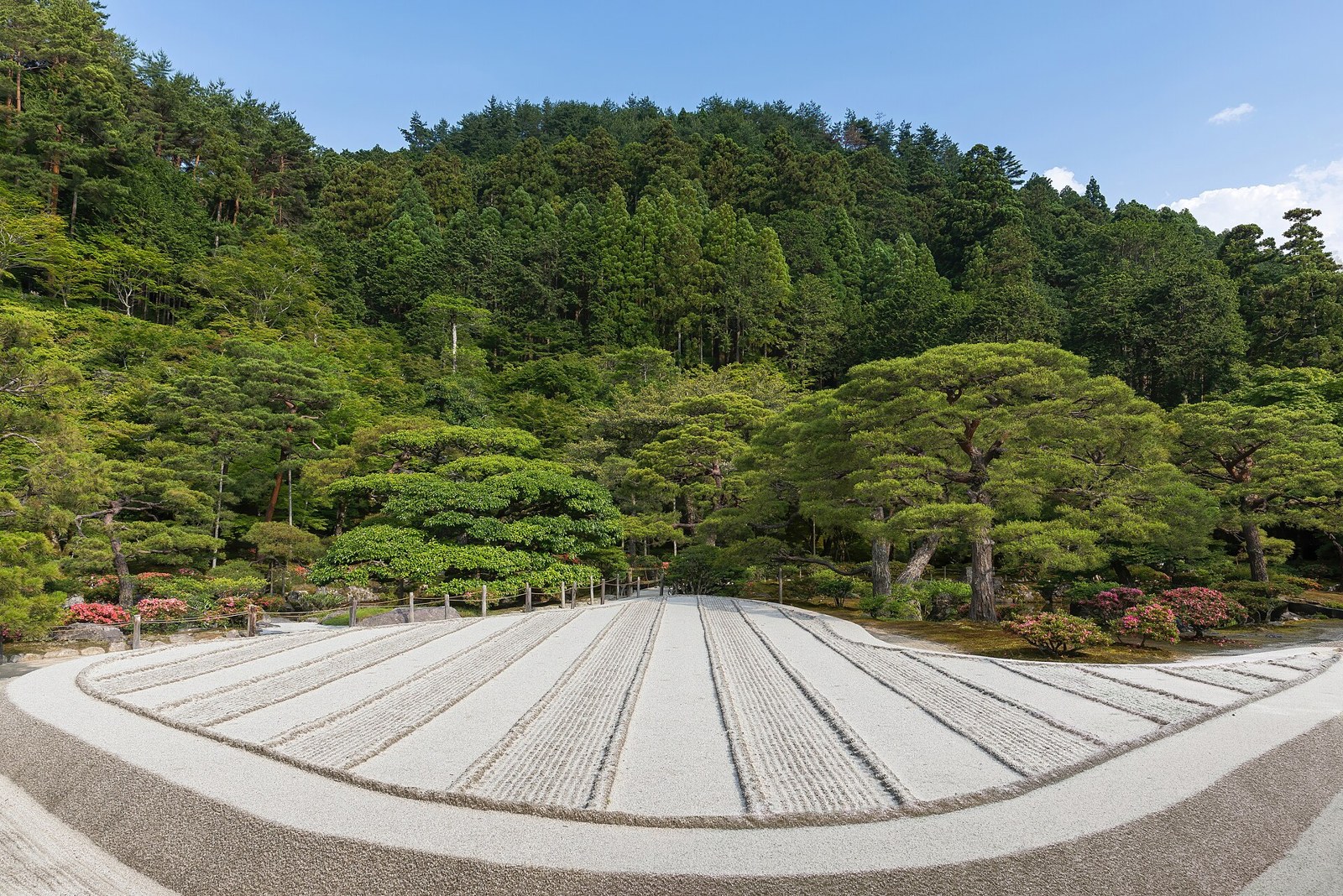
An attentive approach to Kyoto gardens, with time for framing, seasonal change and the rules that protect quiet spaces.


